
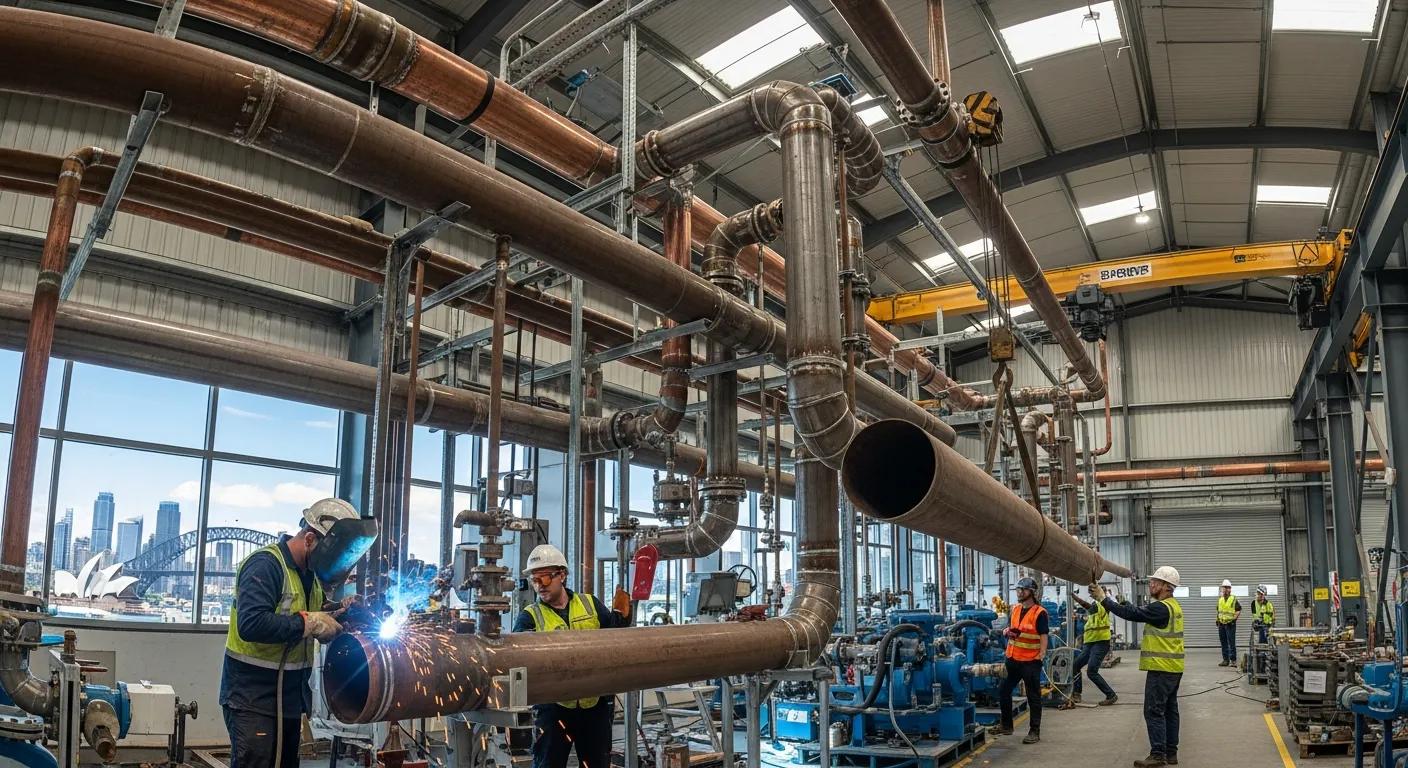
Sydney Industrial Plumbing Solutions: Your Comprehensive Guide for Businesses and Projects
Industrial plumbing involves the large-scale installation, maintenance, and replacement of pipes, drainage, stormwater systems, and utility services for factories, warehouses, and commercial estates. This guide will walk you through understanding industrial plumbing service structures in Sydney, offering insights into hourly and call-out arrangements, service-specific cost considerations, and clear steps for businesses and infrastructure managers. You’ll discover how factors like materials, site access, regulatory charges, and advanced techniques such as directional boring can influence your budget. We’ll also clarify when project quotes are a better fit than hourly billing for complex work. Furthermore, we compare trenchless versus open excavation approaches to help you understand restoration, duration, and return on investment for your industrial sites. Finally, we’ll show you how to request accurate quotes, compare supplier proposals, and—when urgency strikes—engage a local specialist for rapid response to critical industrial faults.
Understanding Industrial Plumbing Service Structures in Sydney

Industrial plumbing service structures in Sydney are influenced by skill level, equipment needs, and urgency. However, typical market benchmarks provide a practical starting point for your budgeting. For routine industrial labour, standard hourly rates are competitive, increasing for specialised trades, confined-space works, or major plant shutdowns. Emergency and after-hours work naturally attracts premiums to cover rapid mobilisation and overtime. For larger installations or projects requiring significant plant, traffic management, and permits, comprehensive project quotes often replace hourly billing. The information below offers indicative ranges to help you convert your project scope into a realistic budget and prepare procurement briefs that account for likely mobilisation and specialist charges.
Let’s look at how hourly rates translate into initial job cost considerations before you seek detailed quotes.
What Are the Hourly Rates for an Industrial Plumber in Sydney?
An industrial plumber’s hourly rate depends on their certification, the equipment required, and the technical complexity of the job. Standard skilled tradespeople typically charge a base hourly rate. For specialised services like process piping, gas fitting, or confined-space entries, you can expect a premium. Complex jobs might shift to day-rates or milestone billing to reflect the necessary supervision and multi-trade coordination. Quoted hourly figures usually include allowances for basic consumables but generally exclude major materials and plant hire. Knowing when a supplier might cap hours or switch to a project quote is key to avoiding unexpected cost escalations.
These hourly considerations naturally lead to understanding first-visit and call-out structures, which are essential for budgeting.
What Are Typical Call-Out Fees and After-Hours Charges?
Call-out fees cover travel, mobilisation, and an initial attendance. These fees vary based on distance, urgency, and time of day, forming a crucial part of the initial investment for industrial faults. Typical call-out fees in Sydney for industrial providers commonly range from standard daytime charges to substantially higher after-hours and public holiday premiums. Emergency rapid response, when immediate action is needed, can involve a significant uplift to the standard rate. Travel to restricted or remote industrial sites, or works requiring permits and traffic management, will add to the first-visit cost and may be itemised separately in estimates. Always confirm whether the call-out fee is credited towards subsequent labour on the same job when comparing different providers.
To make understanding these structures easier, the following table summarises common rate considerations for standard, emergency, and call-out components.
Introductory note: the table below provides a quick reference of typical considerations used by industrial suppliers when preparing preliminary budgets.
Which Industrial Plumbing Services Influence Your Investment in Sydney?
Different industrial plumbing services come with distinct cost drivers and mobilisation needs, and businesses should align service types with realistic investment expectations. Major service categories—such as pipe installation and repair, industrial drainage and stormwater works, trenchless directional boring, and associated civil works—each require specific equipment, traffic or permit coordination, and sometimes multi-trade sequencing. Understanding these service-level drivers helps reduce the risk of underbudgeting and clarifies when a fixed-price project quote is a more suitable approach than hourly billing.
This section provides a service-by-service view and a table showing key factors linked to typical investment bands.
What Are the Investment Considerations for Industrial Pipe Installation and Repairs?
Industrial pipe installation and repair investments are primarily driven by material choice, pipe diameter, routing complexity, and operational shutdown requirements. Corrosion-resistant or high-pressure materials will naturally command a premium. For linear replacements or new mains, per-metre investments increase notably with diameter and cladding needs, while repair work requiring hot-work permits, confined-space entry, or outage coordination will increase labour and supervision investments. Contractors commonly separate material supply, plant hire, and shutdown windows in their estimates; we recommend seeking itemised line items for these elements. Anticipating contingency allowances for unknowns under slabs or within plant rooms helps prevent later change orders.
The following table maps service attributes to key factors and example investment ranges to make trade-offs transparent.
Introductory note: this table organises how different installation and repair attributes typically affect your investment.
How Much Does Industrial Drainage and Stormwater Management Cost?
Large-scale drainage and stormwater projects involve design, civil excavation, pits, detention or infiltration systems, and often council approvals, all of which create layered investments for industrial sites. Unit investments for channels, pits, and stormwater pipelines vary with depth, materials (concrete, HDPE, PVC), and traffic-rated requirements. Site remediation and reinstatement are major expenditure items where heavy machinery operates across impervious areas. Council fees, Sydney Water connection conditions, and stormwater easement work can add fixed charges or conditions to designs, and allowance for these regulatory investments should be explicit in quotes. We recommend requiring staged pricing for design, civil excavation, drainage installation, and reinstatement to clearly track where investments accrue.
Anticipating regulatory and reinstatement factors reduces procurement surprises and improves the comparability of competing quotes.
How Do Directional Boring and Trenchless Technology Impact Industrial Plumbing Investments?
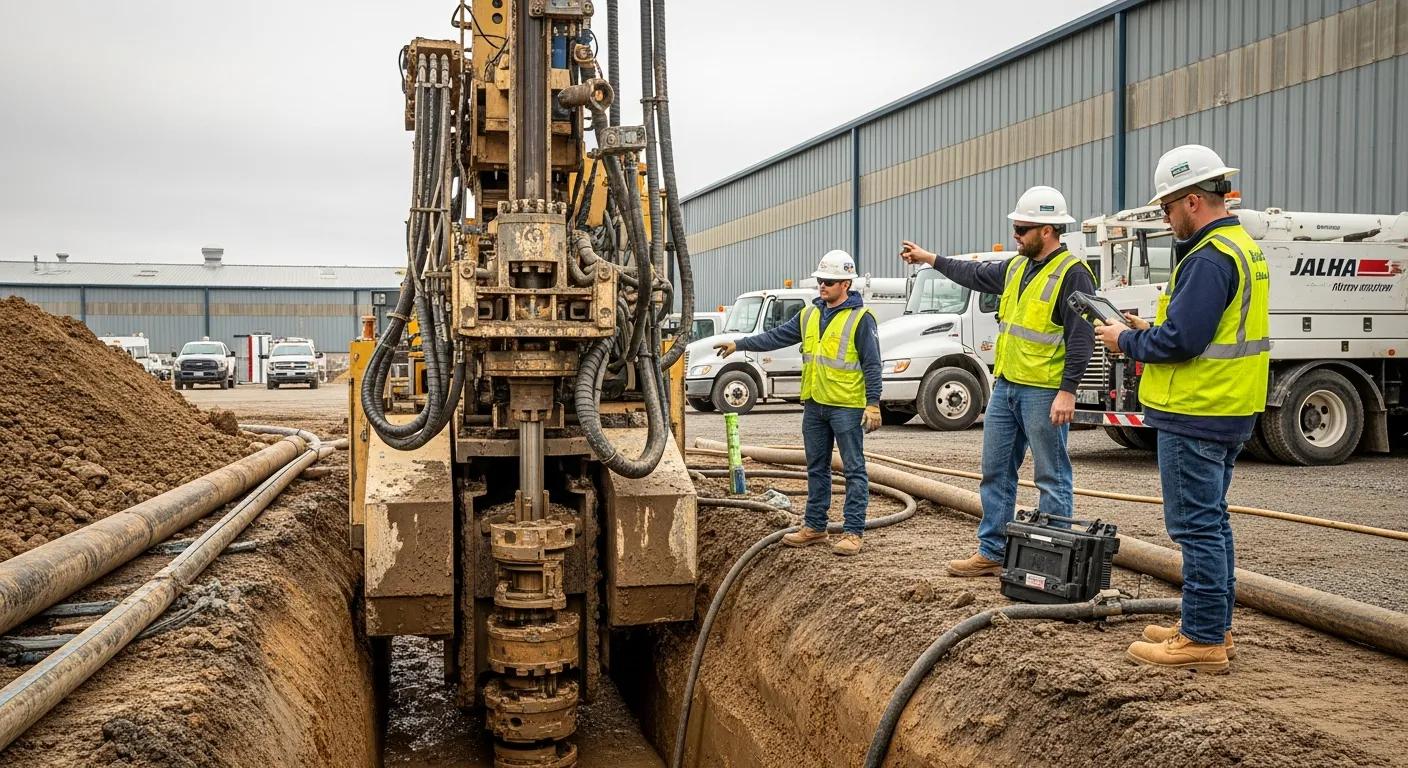
Directional boring and trenchless methods like horizontal directional drilling (HDD) significantly reduce surface disruption and can lower overall reinstatement investments. However, they require specialist rigs, geotechnical considerations, and skilled operators, which influence the upfront investment. Trenchless methods are often chosen where operational continuity, paved surfaces, or environmental constraints make open-cut excavation impractical. The investment calculation should compare bore length, diameter, and soil conditions against the likely restoration expense of traditional excavation. For industrial clients, trenchless techniques frequently deliver lower total project disruption and faster restoration, which can outweigh higher unit investments per metre for the bore itself. The table below compares trenchless and open-excavation outcomes across critical procurement dimensions.
Introductory note: the comparison table below clarifies trade-offs between trenchless and traditional excavation methods for planning and ROI analysis.
What Are Directional Boring Rates for Industrial Projects in Sydney?
Directional boring rates vary by bore length, product pipe diameter, drill rig size, and ground conditions. Short utility bores are priced differently from large civil HDD projects. Small, shorter bores for service crossings are commonly quoted per metre and include setup, pilot bore, and product pullback, whereas larger civil HDD packages involve mobilising larger rigs, traffic control, spoil handling, and HDD-specific contingency allowances. Factors such as rock, groundwater, and existing underground services can notably increase both time and investment. A practical mid-size example helps procurement teams estimate early: a medium-diameter bore of a certain length in relatively benign soils will attract a materially different quote to a similar length bore through rock or under major carriageways.
Knowing these rate drivers helps businesses specify geotechnical conditions and access constraints in tender documents to get realistic HDD pricing.
What Are the Investment Benefits of Trenchless Technology Compared to Traditional Excavation?
Trenchless systems reduce reinstatement efforts, shorten disruption, and often improve safety on busy industrial sites. This translates into a compelling return on investment in many scenarios, despite potentially higher per-metre plant investments. The benefits typically include reduced labour for surface remediation, quicker return to full operations, and lower traffic management durations, all of which can outweigh a higher equipment charge when downtime investments are significant. However, trenchless isn’t always the best choice: for shallow, simple routes with low reinstatement needs, open excavation may remain more investment-effective. Evaluating total project investment—including restoration and potential operational loss—is essential to select the correct method.
A focused bullet list highlights when trenchless usually provides the best value:
- Where paved yards or roadways must remain intact to avoid expensive resurfacing and traffic disruptions.
- When operational downtime is costly, rapid reinstatement reduces production losses.
- Crossing multiple utilities safely reduces risk compared to open excavation.
What Factors Influence Industrial Plumbing Project Investments in Sydney?
Several consistent factors influence project budgets across industrial plumbing works, and your procurement documents should capture each to make supplier comparisons meaningful. Complexity and project size determine labour and supervision needs, material selection affects unit investments, and compliance requirements add fixed testing and