What Makes Sustainable Plumbing Essential in Sydney? Eco-Friendly Plumbing, Water Efficiency, and Environmental Benefits
Sustainable plumbing combines efficient water use, reduced energy consumption, and smarter runoff management to protect resources and urban ecosystems, and in Sydney, this approach directly addresses local supply pressures and stormwater risks. This guide explains why sustainable plumbing matters in Sydney, outlines the specific technologies and civil-scale practices that deliver measurable savings, and shows how these approaches improve resilience for homeowners, businesses and municipal projects. Readers will learn how low-flow fixtures, rainwater harvesting, greywater recycling, trenchless directional boring and advanced stormwater treatment work, what savings and incentives to expect, and how service specialists support large and small projects. The piece balances practical guidance with infrastructure-scale thinking so councils and developers can compare conventional and sustainable approaches. Expect clear comparisons, decision-making lists, and short FAQ answers to common Sydney questions about regulation and value. Throughout, the content integrates local relevance and service capabilities to help readers plan realistic, sustainable plumbing upgrades.
Why Is Sustainable Plumbing Crucial for Sydney’s Water Conservation and Environment?
Sustainable plumbing is crucial in Sydney because it reduces demand on potable supplies, lowers energy used for heating water, and cuts pollutant loads in urban runoff. The mechanism is simple: by reducing water consumption, capturing and reusing non-potable flows, and treating stormwater before discharge, sustainable plumbing reduces extraction from mains systems and the energy required for treatment, which in turn lowers carbon emissions. Combined demand-side measures reduce peak stress on supply infrastructure and support long-term infrastructure planning. The local effect is tangible: less runoff entering harbour and estuary systems improves water quality and reduces nutrient-driven algal blooms, while lower peak demand improves drought resilience for households and businesses.
- Reduced potable water extraction and extended reservoir supply resilience.
- Lower energy consumption for hot water and associated carbon emissions.
- Improved stormwater quality and reduced sediment and pollutant loads to waterways.
These benefits create a feedback loop where usage reduction reduces treatment loads, and better runoff management reduces pollution — an outcome that directly supports healthier urban waterways and coastal environments.
How Does Water Scarcity Impact Sydney and Drive Sustainable Plumbing Needs?

Sydney experiences seasonal variability and episodic droughts that stress urban water supplies and highlight the value of demand reduction and local reuse.
Population growth and urban densification increase per-area demand, so technologies that cut mains consumption — such as low-flow fixtures, rainwater tanks and greywater reuse — directly reduce municipal extraction rates. The reason these measures scale is that each household or building that reduces daily use multiplies across the city, lowering overall peak demand and reducing the probability of severe restrictions. Practical examples include switching to high-efficiency toilets and using harvested rainwater for irrigation, which together can reduce household mains use by meaningful percentages. Understanding these mechanisms clarifies why proactive plumbing upgrades are both a resilience measure and a smart investment for Sydney residents.
What Environmental Benefits Does Sustainable Plumbing Provide in Sydney?
Sustainable plumbing delivers reduced mains withdrawals, decreased greenhouse emissions through lower hot-water energy use, and cleaner stormwater entering urban water bodies. The mechanism involves substitution (rainwater for non-potable uses), efficiency (low-flow fixtures), and pollution control (on-site attenuation and treatment), each reducing a specific environmental pressure. Compared to conventional plumbing that relies solely on mains supply and simple drains, sustainable systems cut lifecycle impacts and often extend the effective life of local infrastructure. For residents and local authorities, the key outcomes are measurable: fewer overflow events, reduced treatment burdens, and reduced ecological disturbance in riparian and coastal zones. These outcomes are the basis for policy incentives and community-level adoption strategies that translate environmental gains into practical service and infrastructure benefits.
How Do Clearwater Plumbing’s Sustainable Services Support Eco-Friendly Plumbing in Sydney?
Clearwater Plumbing & Civil provide specialised, high-quality plumbing and civil infrastructure services across Sydney, with a focus on directional boring, stormwater management, and commercial and industrial plumbing projects.
Clearwater Plumbing & Civil applies civil-level techniques and plumbing expertise to reduce surface disruption and improve long-term system performance, which is particularly useful in dense urban and sensitive sites.
The company maps trenchless technologies, stormwater design, and precision leak detection to sustainability goals so project teams can select interventions that minimise reinstatement, preserve vegetation, and lower embodied emissions. For larger developments and council projects, this integrated approach shortens downtime and delivers long-term value, while for homes and strata properties, it focuses on practical measures that cut water and energy use without major disruption. Below is an explicit mapping of services to sustainable attributes and client benefits to illustrate how service-level choices produce environmental outcomes.
This table shows how civil-scale services act as components in broader sustainability strategies, enabling both small-scale savings and infrastructure-level resilience.
What Role Does Directional Boring Play in Sustainable Plumbing Solutions?
Directional boring, a trenchless installation method, installs pipes underground with minimal surface excavation, which reduces the need for road and landscape reinstatement and prevents habitat disturbance. The mechanism uses a guided bore and pull-back process that places new pipes beneath surfaces, avoiding extensive trenching and lowering material movement and spoil disposal volumes. Compared to open-trench approaches, directional boring reduces vehicle movements and associated emissions and shortens project timelines, which collectively cut project carbon footprints. This method is especially suitable for installing new service lines, connecting stormwater pipes under roads, and enabling infrastructure upgrades without prolonged disruption to traffic or businesses. For municipal and commercial projects, the result is reduced overall project impact alongside precise alignment in constrained urban sites.
How Does Stormwater Management Improve Water Quality and Sustainability?

Stormwater management combines attenuation, sediment capture, and pollutant treatment to reduce the volume and contamination of runoff entering waterways, improving aquatic health and reducing flood peaks. Design features such as swales, bioretention, and offline detention slow flows, promote infiltration, and filter pollutants before water reaches drains, which reduces sediment and nutrient loads that cause algal growth and ecosystem harm. For developers and councils, integrating stormwater treatment into site design can satisfy regulatory requirements and improve public amenity by reducing flood impact and improving downstream water quality. Effective stormwater systems also provide resilience under intense rainfall events commonly seen in the Sydney region and support urban greening strategies that further enhance environmental outcomes.
What Are the Key Sustainable Plumbing Technologies Transforming Sydney Homes and Businesses?
Sustainable plumbing technologies combine demand reduction, local reuse, and smarter controls to reduce mains consumption and energy use while improving water quality. The central technologies include rainwater harvesting, greywater recycling, low-flow and high-efficiency fixtures, smart leak detection systems, and more energy-efficient hot water systems such as tankless or solar-assisted units. Each technology works through a specific mechanism: rainwater harvesting captures precipitation for non-potable use, greywater recycling redirects bath and laundry flows for toilet flushing or irrigation, and smart sensors detect leaks early to avoid prolonged losses. These technologies are applicable in retrofits and new builds and can be combined to multiply savings across water and energy categories.
- Low-flow fixtures: Reduce flow rates at the source and cut per-use water consumption.
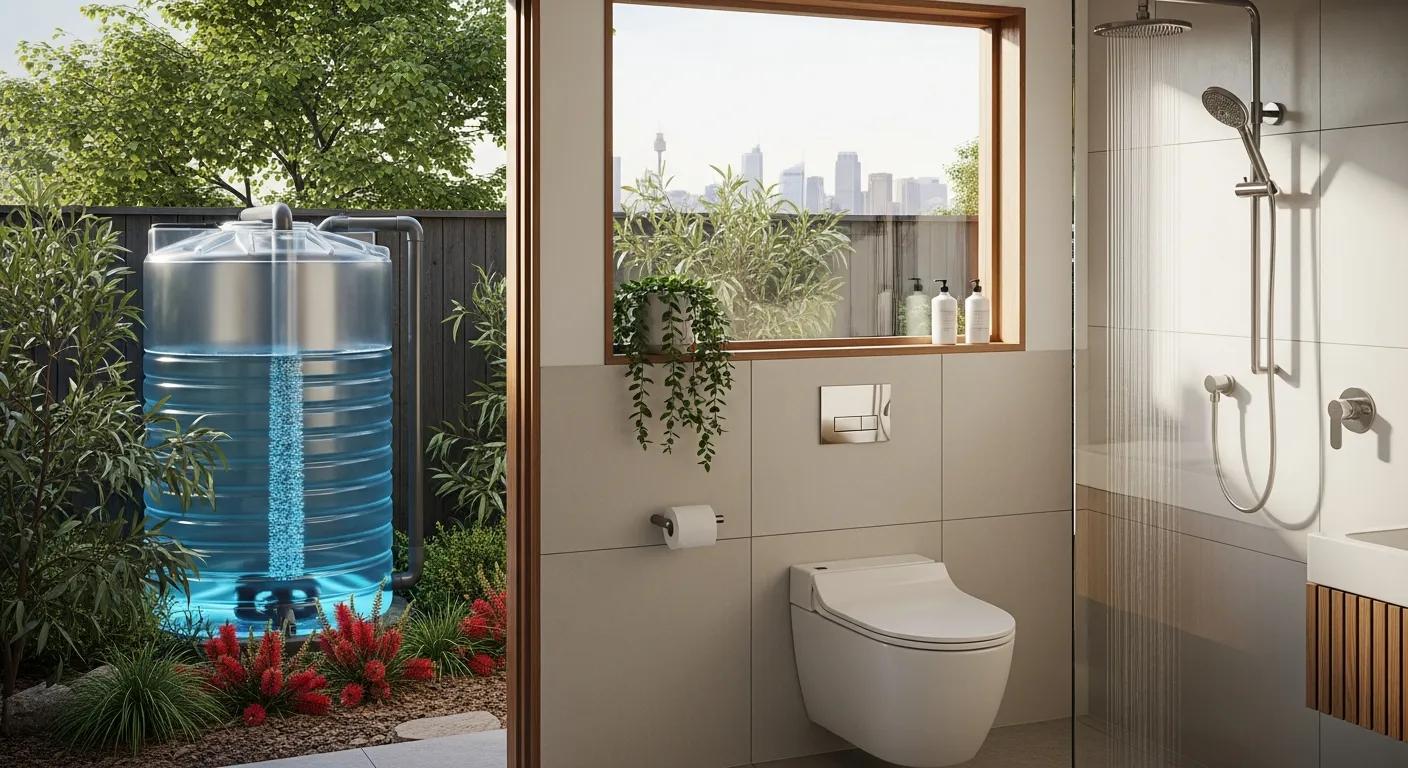
- Rainwater harvesting systems: Capture rooftop runoff for irrigation and toilet flushing.
- Greywater recycling systems: Reuse lightly contaminated household wastewater for non-potable uses.
- Smart leak detection: Identify and isolate leaks to prevent water loss and property damage.
These technologies are complementary: for example, pairing rainwater harvesting with efficient fixtures increases the share of non-potable demand met by harvested water, and adding smart controls optimises system performance across a site.
Intro to the technology comparison table: The following table compares common technologies by a representative attribute and an indicative value to help estimate impact when selecting measures for Sydney properties.
This comparison highlights how combining technologies yields cumulative savings; pairing fixtures with reuse systems typically delivers the largest practical reduction in mains demand.
How Do Water-Efficient Fixtures Reduce Consumption and Costs?
Water-efficient fixtures reduce consumption by lowering flow rates or using less water per cycle, which directly reduces the volume of hot and cold water entering a property and the energy required for heating. Common mechanisms include aerators that maintain perceived pressure while using less water, dual-flush toilets that separate flush volumes, and efficient showerheads that limit litres per minute without compromising user experience. The financial impact is measurable: lower water meter readings and reduced hot-water energy translate into lower bills and rapid return on investment on fixture upgrades, particularly in multi-occupancy buildings where per-unit savings aggregate. Retrofitting is usually straightforward and provides excellent value, and regulatory frameworks often encourage or mandate efficient fixtures in new developments, making them an accessible first step for many households and landlords.
What Are the Benefits of Rainwater Harvesting and Greywater Recycling Systems?
Rainwater harvesting captures roof runoff and stores it in tanks for irrigation, toilet flushing, and other non-potable uses, while greywater systems treat and redirect bath and laundry flows for similar purposes, both reducing reliance on mains water. The primary benefits include reduced mains water use, lower stormwater runoff volumes during rain events, and decreased demand on treatment facilities. Components typically include tanks, pumps, filters and treatment modules for greywater, and maintenance is necessary to ensure system hygiene and performance. Suitability depends on property type and usage patterns: detached homes often gain the most from tank-based rainwater systems, while multiunit buildings may benefit more from centralised greywater recycling that serves multiple fixtures.
How Do Sustainable Plumbing Solutions Benefit Residential, Commercial, and Government Clients in Sydney?
Sustainable plumbing solutions deliver tailored benefits across residential, commercial and government sectors by matching technology and scale to client objectives such as cost reduction, compliance, and infrastructure resilience. For homeowners, the focus is on lower bills, comfort, and improved property value through efficient fixtures and rainwater systems, while businesses prioritise operational continuity, reduced utility costs, and regulatory compliance for large water users. Government and local authorities gain from reduced stormwater impacts, lower lifecycle costs for public assets, and improved community resilience during climatic extremes. The shared mechanism across segments is optimisation: selecting the right mix of fixtures, reuse systems and civil methods such as trenchless installation to reduce lifecycle impact and improve deliverability.
- Homeowners: Practical upgrades provide immediate bill savings and increased drought resilience.
- Commercial clients: Scaled systems reduce operating costs and minimise downtime during works.
- Local government: Integrated stormwater and civil solutions reduce flood risk and maintenance costs.
These benefits translate into project-level decisions: developers can choose trenchless methods to avoid reinstatement delays, property managers can adopt smart leak detection to cut losses, and councils can integrate on-site treatment to defer expensive central upgrades.
What Sustainable Plumbing Advantages Do Sydney Homeowners Experience?
Homeowners gain reduced mains bills, lower hot-water energy costs, and greater resilience to temporary supply restrictions through simple changes such as efficient fixtures, rainwater tanks, and leak monitoring. The reason these upgrades pay is that household water use is predictable and multiple small reductions compound to produce meaningful savings, and because hot water accounts for a significant portion of domestic energy use, efficient hot-water systems further cut bills. Examples include replacing older toilets with dual-flush models and adding a modest rainwater tank for garden use; each measure reduces both immediate costs and long-term wear on municipal systems. Maintenance obligations are manageable, and routine checks plus occasional filter changes keep systems performing reliably, so homeowners experience ongoing value with limited operational overhead.
How Do Commercial and Local Government Clients Gain from Eco-Friendly Plumbing?
Commercial and government clients benefit through operational savings, compliance with environmental standards, and enhanced long-term value when sustainable plumbing is integrated into design and maintenance regimes. At scale, reduced reinstatement and faster delivery through trenchless installation lower program risks and temporary loss of service, while centralised reuse and stormwater treatment reduce reliance on mains and the need for expanded sewer or treatment capacity. Procurement strategies that prioritise long-term value find that sustainable measures often offer a quicker return on investment than conventional capital-only comparisons suggest, particularly where energy or wastewater charges are significant. For councils, strategically placed attenuation and treatment also mitigate urban flooding and protect receiving environments, delivering public benefits that exceed direct financial returns.
What Are the Long-Term Cost Savings and Regulatory Incentives for Sustainable Plumbing in Sydney?
Long-term savings from sustainable plumbing arise from reduced water and energy bills, reduced maintenance and restoration expenses, and extended asset lifetimes, while incentives from local planning and environmental programs can improve project economics. The mechanism of savings combines immediate reductions in operational expenses with deferred major infrastructure investments on centralised infrastructure as distributed systems reduce peak loading. Return on investment timelines vary by technology and site, but are often swift for fixture retrofits and rainwater systems, and are longer but still compelling for larger greywater and stormwater installations when lifecycle considerations are accounted for.
Below is a table that compares typical installation categories with indicative investments or incentives and expected long-term savings to aid decision-making.
This comparison demonstrates that smaller efficiency measures offer rapid value while larger reuse and treatment systems need lifecycle assessment but yield substantial resilience and environmental benefits.
How Does Sustainable Plumbing Lower Water and Energy Bills?
Sustainable plumbing lowers bills by reducing the volume of water purchased and the energy required to heat it, with savings compounding across fixtures and reuse systems. For instance, replacing inefficient fixtures can cut per-fixture consumption by 20–60%, while a rainwater tank can supply irrigation and toilet flushing demand, removing a substantial portion of outdoor water use from the meter. Tankless or solar-assisted hot water systems further reduce energy costs by delivering heat on demand or using renewable energy, and combined approaches can accelerate the return on investment by stacking savings. Actual returns depend on usage patterns and system sizing, but efficient technology reduces resource consumption, which lowers bills and carbon emissions.
What Government Incentives Encourage Green Plumbing Practices in Sydney?
Government incentives such as planning requirements, development targets and council rebates encourage the adoption of efficient fixtures and on-site water reuse, and schemes like BASIX influence water and energy performance in residential developments. These mechanisms operate by assigning performance targets or offering rebates that lower upfront investments and make sustainable choices more competitive with conventional alternatives. Eligibility and details change over time, so project teams must consult current guidelines from state and local authorities, but historically, incentives have focused on rainwater capture, efficient appliances, and stormwater mitigation measures. When incentives are combined with operational savings, the overall value proposition on many sustainable plumbing measures improves significantly, which explains why many developments now integrate these measures at the design stage.
What Common Questions Do Sydney Residents Have About Sustainable Plumbing?
This section answers frequently asked questions plainly to help Sydney residents assess options, value and next steps for sustainable plumbing upgrades. Each answer provides a concise explanation followed by a short elaboration to capture common search intents and support decision-making.
What Is Sustainable Plumbing and How Does It Work?
Sustainable plumbing is an approach that reduces potable water use, reuses appropriate wastewater, and treats stormwater to protect local waterways, using a mix of efficient fixtures, reuse systems and treatment devices. The mechanism involves three core actions: minimise demand through efficiency, capture and reuse non-potable flows, and control runoff to reduce pollution and flooding. Practical elements include low-flow taps, rainwater tanks, greywater treatment modules, and infiltration or bioretention systems for stormwater, each contributing to lower mains reliance and reduced environmental impact. Together, these measures form an integrated water-management strategy that makes buildings and infrastructure more resilient and provides greater value.
How Can Sustainable Plumbing Save Money and Protect the Environment?
Sustainable plumbing saves money by cutting consumption and energy use while protecting the environment through reduced extraction and cleaner runoff; for example, a combined retrofit of efficient fixtures and a modest rainwater tank can reduce household mains consumption by a measurable percentage and deliver significant value within a few years. The calculation is straightforward: lower litres used multiplied by local water and energy tariffs equals immediate bill reductions, while avoided reinstatement and reduced peak loads produce longer-term infrastructure savings. Integrated approaches deliver greater cumulative savings than isolated measures, so combining efficiency, reuse and leak detection usually yields the best economic and environmental outcomes. For those planning upgrades, an initial audit identifies the measures offering the greatest value and clarifies expected savings.
If you want a site-specific assessment or practical advice on implementing sustainable plumbing measures in Sydney, contact Clearwater Plumbing & Civil to arrange a consultation; they can evaluate retrofit options, advise on trenchless installation where appropriate, and outline likely savings and compliance implications.