
Under Road Boring Benefits for Buried Utilities: Directional Drilling Sydney Advantages and Favourable Investment
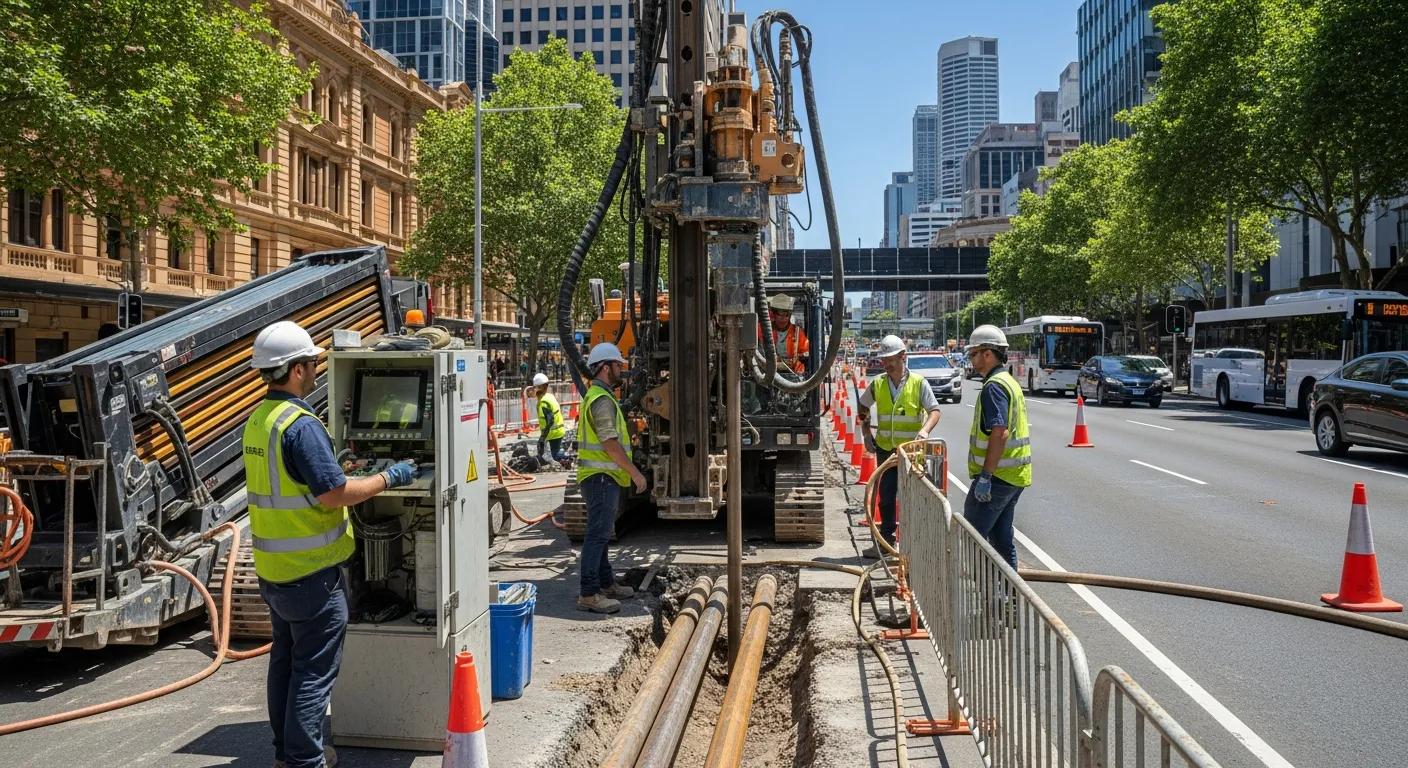
Under road boring, also known as Horizontal Directional Drilling (HDD), is a trenchless method for installing buried utilities beneath roads, driveways and other obstacles with minimal surface disruption, improving project delivery for Sydney infrastructure works. This overview explains why under-road boring is increasingly chosen for buried utility installations across urban and peri-urban areas, detailing the principal benefits, safety and precision mechanisms, typical utility applications and the end-to-end process required for reliable outcomes. Many project managers and local government procurement officers face trade-offs between surface reinstatement investment, traffic impacts and long-term asset performance; trenchless HDD offers measurable improvements across those criteria. You’ll discover the core advantages of HDD, how steering and guidance systems ensure accuracy, which utilities are suited to trenchless installation, and the stages from planning and surveying through pilot bore, reaming and pipe pullback. We’ll then outline the environmental and economic advantages of trenchless approaches and explain how a specialist provider can deliver compliant, low-impact installations for Sydney, Northern Beaches and Port Macquarie projects. Throughout, key terms such as under-road boring Sydney, horizontal directional drilling Sydney and trenchless utility installation Sydney are used to link practical guidance to local delivery contexts.
What Are the Core Benefits of Under Road Boring for Buried Utilities?
Under road boring delivers several primary benefits compared with open trenching by reducing surface impact, shortening programs and improving safety while preserving long-term utility performance. The method uses a pilot bore and directional steering to create an accurate, controlled path beneath obstacles, which results in minimal excavation and reduced need for full pavement reinstatement. These mechanics directly lower traffic management complexity and community disruption, making trenchless installation desirable for arterial roads and sensitive landscapes. Below is a compact comparison of core benefit attributes to support procurement decisions and featured-snippet style answers for quick reader reference.
This table summarises how common benefit areas map to practical outcomes for buried utility projects.
These comparisons show that under road boring, often converts complex surface works into targeted subsurface operations, preserving assets and community access. Understanding how each benefit translates into deliverables leads naturally into a closer look at minimal surface disruption and program efficiencies, which are addressed in the following subsections.
How Does Minimal Surface Disruption Protect Roads and Landscapes?
Minimal surface disruption from under-road boring arises because HDD requires only small entry and exit pits rather than continuous trenches, which preserves road surfaces, kerbs and planted verges. The pilot bore is steered beneath the carriageway using a guidance system, so the surface remains intact and reinstatement is limited to short pit surrounds; this reduces restoration days and traffic management complexity. For local councils and residents, that means fewer lane closures, lower noise and faster return to normal traffic flows, which translates into measurable reductions in community impact. Reduced surface works also limit exposure of soils and minimise erosion and sediment runoff, benefits that are particularly important in the Northern Beaches and coastal catchments of New South Wales.
This protection of surface assets naturally reduces overall project investment and shortens completion time, which leads to the investment and time efficiency comparisons addressed next.
Why Is Under Road Boring More Favourable in Terms of Investment and Time Efficiency Than Traditional Methods?
Under road boring typically offers significant savings on reinstatement and traffic management because it avoids long trench runs and extensive pavement replacement, often delivering a shorter on-site program for comparable utility lengths. The directional pilot, followed by reaming and pipe pullback, compresses labour hours and reduces the need for prolonged traffic control, leading to a more favourable overall project investment in many urban settings. The table below presents a procurement-focused side-by-side comparison of key investment and time attributes to illustrate typical differences between HDD and open trenching.
These comparative values highlight why organisations often select trenchless methods for road crossings where reinstatement and traffic impacts represent a significant portion of project investment. The reduced need for pavement replacement and shorter disruption windows directly benefit businesses and councils, making HDD a pragmatic choice for many buried utility installations.
Trenchless Directional Drilling for Northern Beaches Utilities
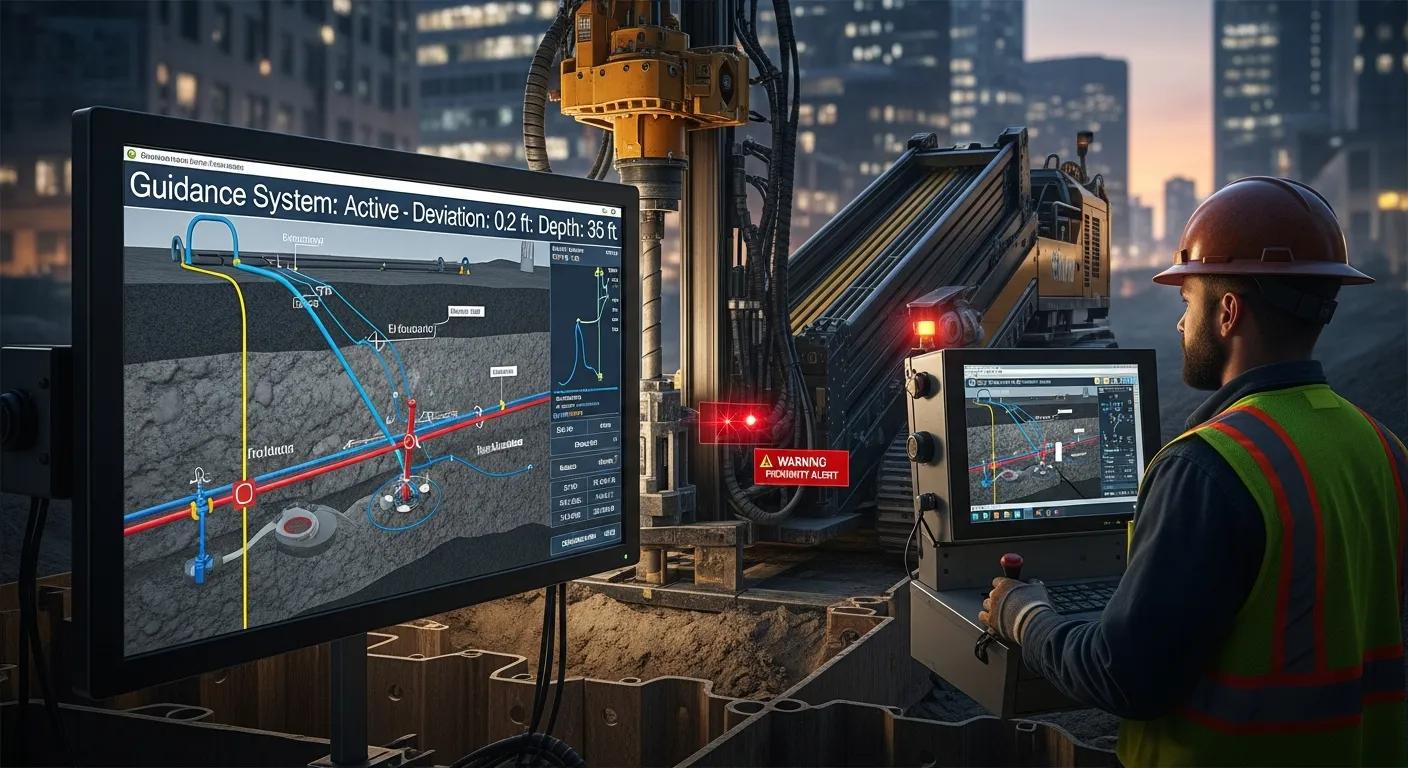
Horizontal Directional Drilling enhances safety and precision by keeping excavation small and remote from live traffic while using active guidance systems to control bore alignment and depth. The pilot bore, equipped with a sonde and tracking apparatus, enables real-time steering so the installed pipe follows the designed profile closely; this mechanism reduces the risk of unintended deviation and accidental strikes of existing services. By minimising open excavations, HDD reduces worker exposure to falls, moving traffic and trench collapse hazards, which is a decisive advantage on busy urban streets. The section that follows explains specific safety advantages of trenchless technology compared with open trenching.
What Safety Advantages Does Trenchless Technology Offer Compared to Open Trenching?
Trenchless technology reduces common open-trench hazards by removing long runs of exposed excavation and concentrating activity within controlled pits, which lowers the probability of falls, equipment ingress issues and traffic collisions near works. With fewer open trenches to manage, safety plans can focus on confined access and machine operation controls rather than continuous trench shoring and lane management, simplifying risk mitigation. Reduced interaction with pedestrians and vehicles also decreases incident potential during installation windows, improving community safety during works. These safety improvements underpin many local authorities’ preference for trenchless methods on arterial routes.
The decreased risk environment created by trenchless methods directly supports precise alignment requirements, which is the next focus.
How Does Directional Drilling Ensure Accurate Placement and Long-Lasting Buried Utilities?
Directional drilling achieves accurate placement through guidance systems, steering tools and staged reaming that control bore diameter and alignment before pipe pullback, ensuring correct bedding and annulus conditions. The pilot bore establishes the path, reaming enlarges the hole to the selected pipe OD, and pullback installs the pipe while monitoring torque and tracking to confirm position; this sequence creates a uniform annulus and supports long service life. Material selection and jointing techniques used in pullback further contribute to durability by ensuring pressure ratings and protective measures meet the utility’s operational requirements. Quality assurance checks, such as post-pullback CCTV or pressure testing, validate installation integrity and inform of any immediate remedial actions.
These QA protocols and material choices improve long-term performance and reduce lifecycle risks for buried utilities, leading into the discussion of which utilities are suitable for trenchless installation.
Which Utilities Can Be Installed Using Under Road Boring in Sydney and NSW?
Under road boring is versatile and commonly used for water mains, sewer and stormwater crossings, gas lines, electrical conduits and telecommunications/fibre installations where subsurface conditions allow. Typical applications include pressure-rated water mains and sewer or stormwater easement crossings where maintaining surface access is essential; for telecommunications, HDD is widely used to install ducts for fibre such as NBN infrastructure. Suitable pipe diameters vary with application, but trenchless methods accommodate a broad range of conduit and pipe sizes by selecting appropriate reaming sequences and pullback assemblies. The next subsections examine water/sewer applications, followed by gas, electrical and telecommunications considerations.
How Is Under Road Boring Used for Water and Sewer Pipeline Installation?
For water mains and sewer pipelines, HDD enables crossings beneath roads and waterways without surface disruption, using pressure-rated pipes and jointing systems selected to meet hydraulic and service conditions. The pilot bore is planned to achieve the required cover and gradient, reamed to accept the selected pipe OD and installed with annulus control to ensure bedding integrity; these steps protect against settlement and allow compliance with council asset requirements. Where stormwater easements are present, trenchless crossings preserve riparian zones and minimise disturbance to vegetation and drainage channels. Proper specification of pressure ratings and post-installation testing provides operational assurance for potable water and sewer assets.
These design and testing practices ensure installations meet service expectations and regulatory oversight, which informs practices for gas, electrical and telecoms installations.
Can Gas, Electrical, and Telecommunications Lines Be Installed Trenchlessly?
Gas, electrical and telecommunications lines are frequently installed using HDD, provided that coordination with utility operators and adherence to regulatory and segregation requirements are observed. Telecommunications ducts and fibre are particularly well suited to trenchless runs, where conduit protects cables and minimises future excavation needs. Electrical and gas installations require careful jointing, protection and notification to network operators to ensure segregated corridors and maintain safety clearances. Across all utilities, warning tapes, tracer wires and documented as-installed surveys support future locating and reduce long-term strike risk for these buried assets.
Understanding process controls now helps when reviewing the step-by-step HDD workflow that follows.
What Is the Under Road Boring Process for Buried Utility Installation?
Under road boring follows a defined sequence—planning and surveying, pilot bore, reaming/backreaming and pipe pullback—each stage supported by equipment, QA checks and reinstatement planning to deliver a compliant installation. Planning involves subsurface utility detection, route selection and traffic/permit arrangements; the pilot bore establishes alignment, reaming creates the required annulus, and pullback installs the pipe while monitoring forces and alignment. Equipment typically includes a directional drilling rig, guidance sonde and reamers sized to the pipe OD, plus a support plant for slurry handling and traffic controls. The table below summarises the execution stages and primary QA measures used to validate outcome quality for buried utilities.
This stage-based clarity helps stakeholders understand responsibilities across design, construction and commissioning, and it naturally leads into the subtopics of pre-construction surveys and the specific equipment used on site.
How Are Planning and Surveying Conducted Before Directional Drilling?
Planning and surveying combine desktop geotechnical review, subsurface utility detection and required permits or traffic management approvals to define a safe, achievable bore path. Geotechnical data informs expected ground conditions while utility locating mitigates strike risk and allows design adjustments; route selection considers entry/exit pit locations, cover requirements and any environmental constraints. Relevant approvals and traffic strategies are coordinated with local councils and stakeholders to align program windows and reinstatement expectations. Thorough pre-construction investigation reduces risk during the pilot bore and supports efficient execution.
These planning steps set the stage for equipment selection and the detailed execution phases described next.
What Equipment and Execution Stages Are Involved in Horizontal Directional Drilling?
The typical equipment suite for HDD includes a directional drilling rig matched to bore length and diameter, a guidance sonde and tracker for steering, reamers for hole enlargement and a pullback assembly sized to the planned pipe. Ancillaries such as mud recycling systems, slurry tanks and excavation plant for pit works support continuous operations and environmental controls. Execution follows pilot bore, successive reaming passes and controlled pipe pullback while monitoring torque, pullback force and alignment; QA checks, such as depth surveys and post-installation testing, verify compliance. These coordinated stages, when properly scoped, deliver predictable installations with minimal surface disturbance.
As a practical illustration of how industry best practice is applied onsite, the following paragraph explains how an experienced local contractor approaches planning and equipment selection.
Clearwater Plumbing and Civil applies structured planning, surveying and equipment selection as part of an industry best-practice approach to trenchless works in Sydney, using targeted site investigations and guidance systems appropriate to each crossing. Their practical method emphasises subsurface utility detection, route coordination with local councils and selection of mini-directional or full-size rigs, dependent on project scale, ensuring bore alignment and reinstatement outcomes align with client expectations. This procedural approach provides commercial and government clients with confidence in delivery for underground boring projects.
Why Choose Clearwater Plumbing and Civil for Under Road Boring Services in Sydney?
Clearwater Plumbing & Civil specialises in directional boring, stormwater easements and industrial plumbing services with a focus on trenchless utility installation across Sydney, Northern Beaches and Port Macquarie in New South Wales. Our service offering targets commercial, industrial and residential clients who require low-impact installation methods for water mains, stormwater, telecommunications ducts and other buried utilities. Clearwater emphasises minimal surface disruption, precision steering, and efficient program delivery as value propositions that align with local council priorities and client procurement goals. The information below outlines Clearwater’s capabilities and how to engage our services for directional drilling projects.
What Expertise and Quality Standards Does Clearwater Provide in Directional Drilling?
Clearwater delivers specialised directional boring and trenchless execution with quality control practices tailored to each project’s asset and compliance requirements, drawing on a practical background in civil and plumbing infrastructure. Our approach includes pre-project surveying and planning, appropriate rig deployment for the crossing type and staged QA, such as alignment verification and post-installation testing to confirm installation integrity. Clearwater’s focus areas—directional boring and stormwater management—are integrated into typical scope packages for councils and developers that demand reliable trenchless outcomes. Clients seeking detailed proposals can engage Clearwater to review site conditions and specify the necessary execution and testing regimes.
Which Service Areas and Project Types Does Clearwater Specialise In?
Clearwater provides services across Sydney with explicit coverage of the Northern Beaches, Port Macquarie and wider New South Wales region, addressing projects ranging from residential crossings to large commercial and industrial utility installations. Typical engagements include under-road boring for water and stormwater easement crossings, directional boring for telecommunications ducts, and civil plumbing work associated with infrastructure renewals. Our geographic and technical focus ensures local knowledge of council processes and environmental constraints, supporting compliant delivery. To request an assessment or quote for directional drilling work, prospective clients can contact Clearwater Plumbing & Civil by phone at +61 410 997 080 or visit our local office at 87 Lane Cove Road, Ingleside, NSW.
What Are the Environmental and Economic Advantages of Trenchless Utility Installation?
Trenchless utility installation reduces environmental disturbance and often leads to a more favourable overall project investment by minimising excavation, restoring less surface area and shortening program durations. Less soil disturbance reduces erosion and sediment runoff risks while avoiding wholesale pavement replacement, conserves materials, and reduces embedded carbon associated with heavy reinstatement activities. From an economic perspective, the combination of reduced traffic management and minimal reinstatement needs often results in a more favourable overall investment, including fewer business interruption days and reduced community disruption. The subsections below explore how trenchless methods reduce environmental footprints and how those savings translate into economic and traffic benefits.
How Does Under Road Boring Reduce Environmental Impact and Carbon Footprint?
Under road boring reduces emissions and environmental impact primarily by shortening on-site durations and avoiding large volumes of excavation, transportation and pavement manufacturing associated with open trench reinstatement. Because only small pits are excavated, less spoil is generated, and less heavy plant is required for prolonged periods, which lowers diesel use and associated emissions. Preserving landscaped areas and avoiding disturbance to riparian zones also protects biodiversity and reduces remediation needs. These environmental benefits contribute to lower lifecycle carbon and support sustainability goals for infrastructure projects.
These environmental advantages frequently underpin cost-benefit calculations that influence procurement decisions, which is detailed next.
In What Ways Does Trenchless Technology Offer Favourable Investment and Minimise Traffic Disruption?
Trenchless technology offers significant savings by reducing reinstatement scope, diminishing traffic management durations and enabling faster completion of crossings, which together cut direct construction and indirect social investment. Shorter disruptions mean businesses face less lost trade and councils encounter fewer complaints and lower traffic diversion management expenses. Industry trends indicate that even when the initial investment for HDD might seem comparable, the overall program savings and reduced need for extensive reinstatement often result in a more favourable total project investment. For many municipal and commercial stakeholders, that balance between reduced disruption and lifecycle investment savings makes trenchless the preferred method for under-road utility crossings.
These economic and environmental considerations form the case for selecting trenchless approaches for buried utility installations in Sydney and adjacent regions.