Stormwater Easements Sydney are an essential component of modern civil and commercial development, ensuring water can safely and legally flow across property boundaries without putting buildings, public infrastructure or neighbouring sites at risk. With Sydney’s varied terrain, dense construction activity and increasingly severe weather patterns, stormwater easements have become crucial for protecting assets and maintaining compliant drainage networks throughout the city.
Clearwater Plumbing & Civil provides specialised support for stormwater easements Sydney projects, assisting developers, builders, engineers, councils and property owners in implementing drainage solutions that meet legal requirements and perform reliably under real-world conditions. Their knowledge of stormwater behaviour, council regulations, underground service constraints and hydraulic engineering ensures every easement is installed with precision and long-term functionality in mind.
Why Sydney’s Growth Has Increased the Demand for Stormwater Easements
Sydney’s rapid expansion has resulted in more developments being built in areas where natural drainage paths already exist. As a result, stormwater easements are often required to allow water to pass through private or commercial properties safely. This prevents flooding, erosion and structural damage while supporting the area’s broader drainage network.
Intensification of urban areas means more impermeable surfaces—such as roofs, roads, pavements and car parks—which increases stormwater runoff. Without properly designed easements, this runoff can overwhelm existing systems and cause water build-up on adjacent sites. Councils across Sydney now place heightened emphasis on stormwater infrastructure and enforce stricter assessment requirements for developments that alter natural flow paths.
Clearwater Plumbing & Civil plays a key role in ensuring easements are correctly designed, installed and maintained to protect both private and public assets.
How Stormwater Easements Work in Commercial and Civil Projects
A stormwater easement is a legally defined corridor that allows stormwater to flow through one property for the benefit of another. This channel may be above ground, underground, or a combination of both, depending on site conditions and engineering requirements. In commercial and civil projects, this easement typically accommodates large-diameter stormwater pipes, pits, culverts or open drains that connect two or more properties.
The purpose of an easement is to ensure drainage remains unobstructed and continues to function effectively regardless of property ownership changes. The property hosting the easement must maintain access for repairs, inspections and upgrades, and cannot build structures that obstruct or compromise the drainage system.
Clearwater Plumbing & Civil assists with designing and constructing these systems in a way that preserves long-term performance while meeting all legal obligations.
Understanding the Engineering Behind Effective Stormwater Easements
Designing a reliable stormwater easement requires detailed hydraulic planning and a thorough understanding of water behaviour. Engineers assess rainfall intensity data, catchment characteristics, expected flow rates and downstream capacity to determine the correct pipe sizes, gradients and pit configurations.
Several engineering considerations influence stormwater easement design:
- Flow velocity and direction
- Pipe material selection
- Soil stability and compaction
- Depth of installation
- Integration with existing stormwater networks
- Erosion control measures
- Overland flow considerations
- Allowable discharge points
Sydney’s varied topography—ranging from steep hillside suburbs to flat, flood-prone industrial zones—adds additional layers of complexity. Clearwater Plumbing & Civil works closely with engineers and designers to ensure all easement installations support efficient drainage under both normal and peak rainfall conditions.
Council Regulations and Compliance Requirements for Stormwater Easements
Every stormwater easement Sydney project must meet specific council regulations. Councils require detailed stormwater management plans, hydraulic reports, legal drawings, and proof that the easement will not negatively impact surrounding properties.
Key compliance requirements typically involve:
- Legal creation of the easement on the property title
- Approval of all hydraulic designs
- Inspection of works during installation
- Confirmation of connection points
- Certification of pipe grades, materials and depths
- Adherence to local environmental guidelines
- Documentation of access rights for maintenance
Stormwater easements often require collaboration between surveyors, hydraulic engineers, solicitors, civil contractors and council officers. Clearwater Plumbing & Civil understands the regulatory landscape and supports clients throughout the approval and construction process.
The Impact of Sydney’s Weather Conditions on Stormwater Easements
Sydney is known for significant rainfall variations, including intense storm events that can cause rapid increases in stormwater flow. These weather patterns put pressure on drainage systems, especially in heavily built-up suburbs.
Stormwater easements must be resilient enough to handle:
- Sudden surges in water volume
- Overflow from upstream catchments
- Blockages caused by debris
- Soil movement caused by saturation
- Increased groundwater levels
Choosing the right materials, pipe sizes and installation methods helps ensure the system remains reliable even in severe weather. Clearwater’s team incorporates these climate considerations into every stormwater easement Sydney project, building systems that withstand long-term environmental pressures.
Practical Scenarios Where Stormwater Easements Are Required
Stormwater easements are commonly required in a range of commercial, industrial and multi-residential developments across Sydney. Examples include:
New Developments Relying on Downgradient Drainage
A new building may need to discharge stormwater into a pipe located on a neighbouring property. Without an easement, this connection would be illegal.
Redevelopment of Older Properties
Properties undergoing major upgrades often require new stormwater pathways to meet modern drainage standards.
Commercial Sites With Large Roof Areas
Warehouses, retail complexes and showrooms produce significant runoff, requiring controlled drainage paths.
Steep Blocks with Overland Flow
Suburbs with sloped terrain frequently rely on stormwater easements to safely redirect water downhill.
Developments Near Natural Watercourses
Proximity to creeks, wetlands or waterways may require engineered connections through private land.
In each scenario, Clearwater Plumbing & Civil provides installation expertise that ensures stormwater is conveyed safely according to legal and engineering requirements.
Managing Construction Constraints in Stormwater Easement Projects
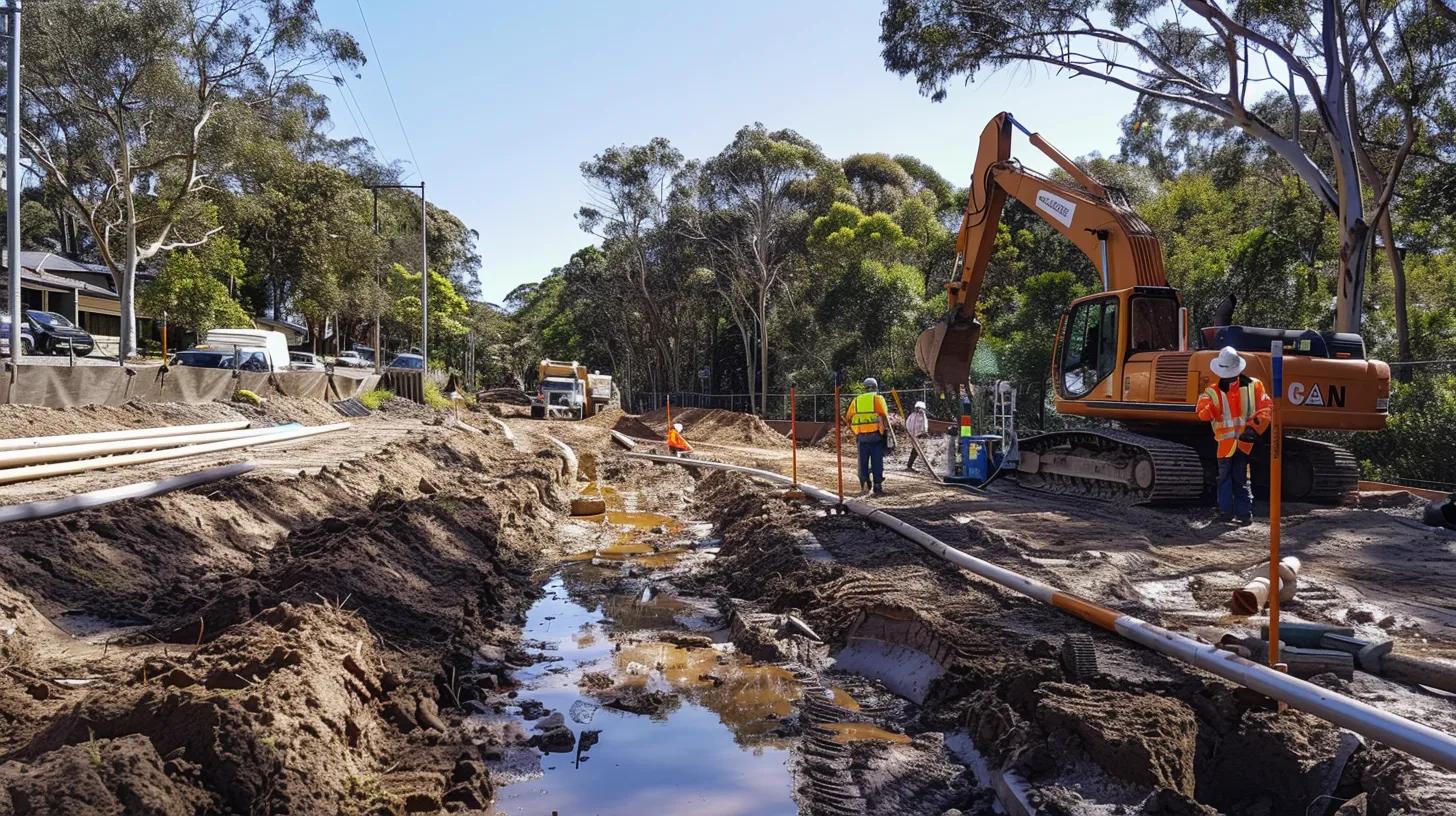
Installing a stormwater easement often involves working within restricted spaces, alongside existing underground utilities such as sewer lines, electrical conduits, NBN cabling and gas pipes. This requires precision planning and safe excavation techniques.
Clearwater Plumbing & Civil approaches each project with attention to:
- Utility mapping
- Safe excavation methodology
- Soil condition assessments
- Protection of adjacent structures
- Maintaining correct pipe gradients
- Managing groundwater intrusion
- Minimising disturbance to surrounding properties
Their specialised equipment allows for safe and efficient installation even in confined or complex environments.
The Role of Trenchless Technology in Easement Construction
In many stormwater easement Sydney projects, trenchless methods—including under-road boring and guided drilling—play a vital role in connecting easements beneath roads, driveways or landscaped areas without major surface disruption.
These trenchless solutions offer benefits such as:
- Reduced restoration costs
- Minimised traffic interruptions
- Faster installation
- Less impact on neighbouring properties
- Increased safety
Clearwater’s ability to integrate trenchless methods with traditional civil construction ensures seamless completion of even the most challenging easement works.
Ensuring Long-Term Reliability of Stormwater Easements
A stormwater easement’s effectiveness depends on the quality of its installation and its ability to perform under decades of usage. Clearwater Plumbing & Civil emphasises durability through:
- Proper bedding and compaction
- Corrosion-resistant materials
- Secure pipe joins
- Accessible pit locations
- Oversized capacity for future-proofing
- Erosion control where needed
- Clear maintenance access
These measures reduce the likelihood of future failures, blockages or flooding events, protecting both the property owner and the broader community.
Stormwater Easement Maintenance and Future Management
Once an easement is installed, maintaining it is essential for long-term performance. Regular inspections help identify issues such as sediment build-up, vegetation intrusion, damaged pits or blockages.
Clearwater provides maintenance services that ensure stormwater systems remain compliant and operational. This proactive approach helps avoid costly drainage failures and ensures the easement continues to serve its purpose effectively.
Work With Stormwater Easement Specialists Who Understand Sydney’s Drainage Demands
Stormwater Easements Sydney require a blend of engineering insight, regulatory knowledge and practical civil construction experience. Whether supporting a new development, upgrading aging infrastructure or preserving natural flow paths, a well-designed easement protects properties and enhances community safety.
Clearwater Plumbing & Civil delivers stormwater easement solutions that meet Sydney’s complex drainage challenges with precision and reliability. When your project requires a drainage pathway that complies with legislation and performs under pressure, partnering with experienced professionals ensures your stormwater systems remain secure well into the future.