Sydney Drainage System Installation Services Explained: Your Comprehensive Guide to Stormwater, Subsoil, and Trenchless Solutions
Effective drainage system installation combines site-specific assessment, appropriate system selection, and correctly executed installation to protect properties from water damage and erosion. This guide explains Sydney drainage system installation services in practical terms, showing how stormwater drainage, subsoil solutions, and modern trenchless techniques like directional boring and pipe relining work together to manage runoff, protect foundations, and meet regulatory requirements. Many Sydney homeowners, commercial property managers, and procurement officers need clear, localised guidance on system types, compliance steps, and factors influencing your investment; this guide provides that blueprint with actionable steps and comparisons. You will learn the key types of drainage systems used across Sydney, how trenchless technology reduces disruption, the step-by-step process for installing drainage, including approvals, plus maintenance and investment considerations. This guide also outlines how professional installations benefit both residential and commercial properties and describes when to engage licensed contractors for assessment, design, and installation. Read on for detailed lists and practical next steps to make informed decisions about drainage upgrades or new installations in Sydney.
What Are the Key Types of Drainage Systems Installed in Sydney?
Drainage system installation covers a range of approaches that move surface and subsurface water away from buildings and infrastructure to protect assets and manage stormwater. Typical systems installed in Sydney include stormwater pits and pipes, surface channel drains, subsoil or French drains, soak wells, downpipe connections, and onsite detention (OSD) systems used where detention is required. Each system has a primary function, installation footprint, and suitability depending on property scale—residential gardens, commercial sites, or civil projects—so choosing the correct type starts with a diagnostic assessment. Below is a concise list of the main system types, followed by a short comparison to highlight when each is preferable.
The main drainage system types commonly used in Sydney include:
- Stormwater pit and pipe systems: Collect surface runoff and convey to Council or on-site outlets for general property drainage.
- Surface channel drains: Capture concentrated runoff across paved areas like driveways and loading bays to prevent ponding.
- French drains/subsoil drains: Perforated pipe in gravel trenches that lower groundwater and relieve hydrostatic pressure.
- Soak wells: Store runoff for infiltration where soil permeability allows; useful in smaller sites with good percolation.
- On-site detention (OSD) systems: Temporarily store stormwater and release it at controlled rates to meet discharge conditions.
Choosing the right system depends on factors such as rainfall intensity, soil type, and connection options; the following subsections explain stormwater and subsoil systems in more detail to guide selection.
How Does Stormwater Drainage Protect Sydney Properties?
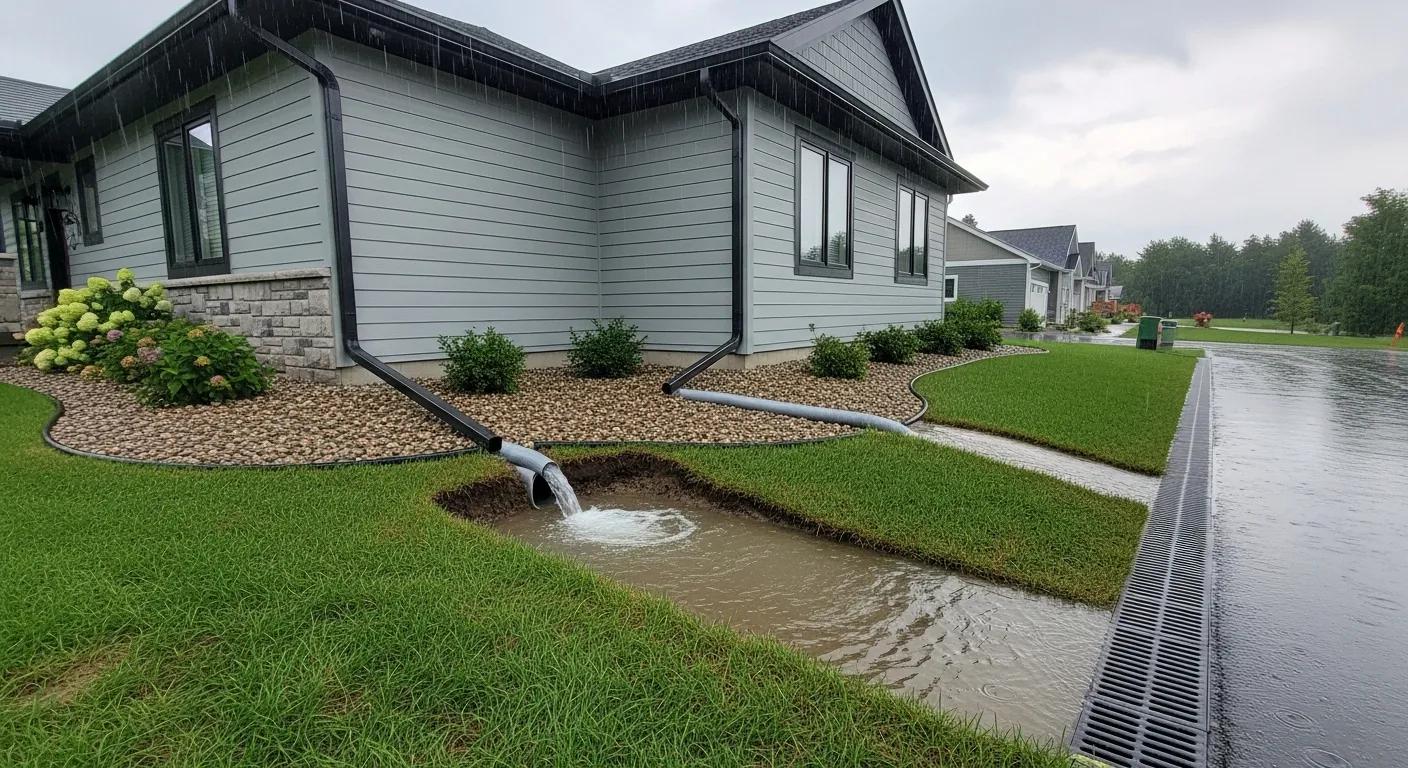
Stormwater drainage directs surface water from roofs, paved surfaces, and gardens into dedicated channels and pipes so runoff does not accumulate around buildings or landscape areas. Properly designed stormwater pits, downpipe connections, and conveyance pipes reduce the risk of flooding, prevent water ingress to basements, and lower the chance of structural damage caused by prolonged saturation. In Sydney’s variable climate, effective surface drainage minimises immediate flood risk during heavy rainfall events and reduces long-term deterioration of pavements and landscaped areas. Understanding stormwater drainage protection clarifies why immediate assessment after storm incidents is crucial, and this leads naturally to considering subsurface or subsoil drainage for persistent groundwater issues.
What Are Subsoil Drainage Systems and Their Benefits?
Subsoil drainage—commonly installed as French drains or perforated pipe systems—removes excess groundwater from beneath foundations and garden beds by intercepting and redirecting it away from structures. A typical French drain comprises a perforated pipe wrapped in geotextile and surrounded by a gravel layer to allow water entry while reducing silt ingress; this composite structure lowers groundwater levels and relieves hydrostatic pressure on foundations. Subsoil drainage is particularly beneficial in clay soils, sloping sites, or properties with poor natural drainage because it protects retaining walls, reduces wet patches in lawns, and prevents basement seepage. Regular inspection and maintenance reduce the risk of root intrusion and sediment build-up, and recognising when a subsoil system is required follows directly from a comprehensive drainage assessment.
How Does Trenchless Drainage Technology Improve Installation Efficiency?
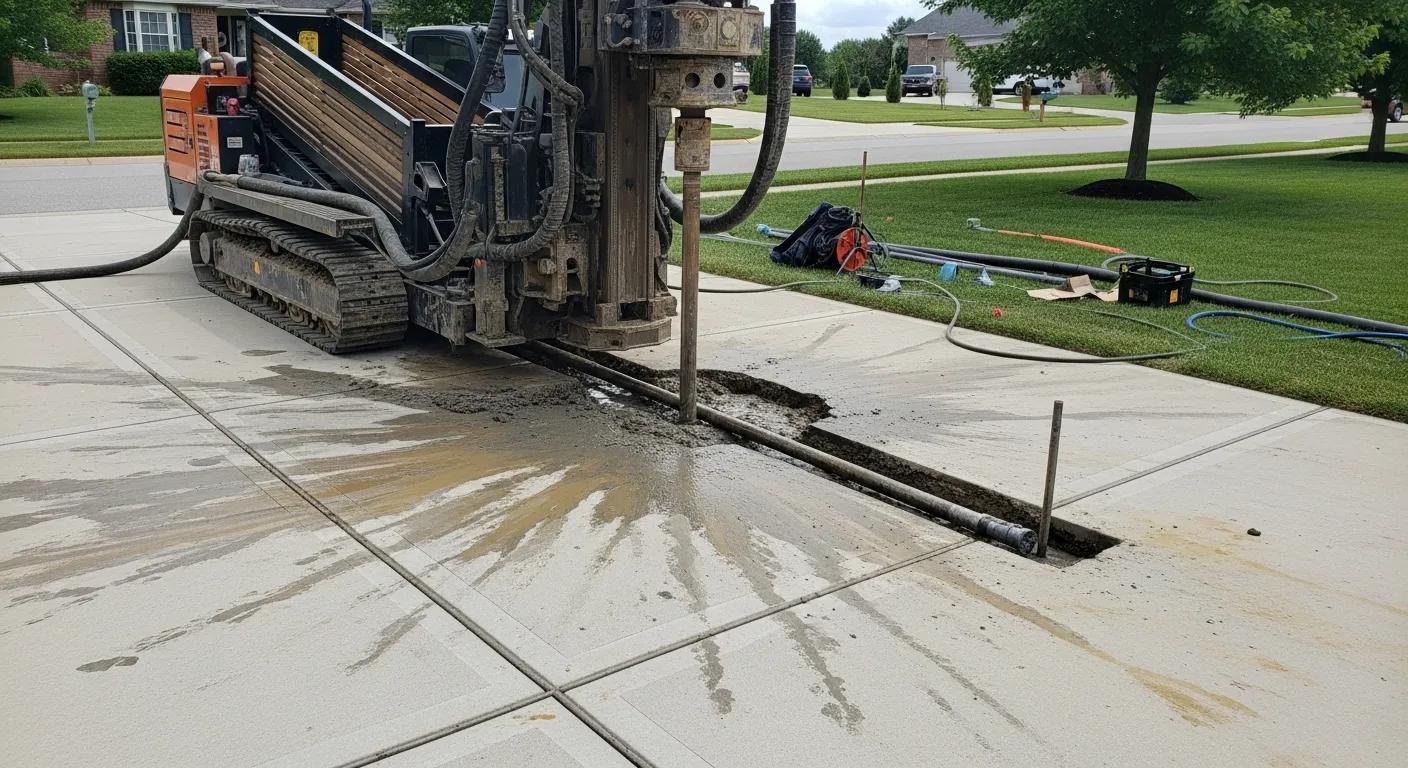
Trenchless drainage technology allows installation or rehabilitation of drainage pipes with little or no open excavation, reducing surface restoration investment, time on-site, and disruption to landscaping and traffic. Techniques such as directional boring and pipe relining achieve conveyance or repair objectives while preserving paved surfaces and vegetation, delivering measurable benefits in urban Sydney, where access and restoration often influence the overall project investment. The advantages include shorter project timelines, lower reinstatement expenses, and reduced environmental impact from spoil and machinery; the next subsections describe directional boring and pipe relining in practical terms and show typical use-cases and limitations.
Trenchless methods are appropriate when surface disruption must be minimised or when pipes pass under driveways, roads, or structures. The following list summarises trenchless benefits:
- Reduced restoration investment: Less excavation means fewer repairs to driveways, turf, and landscaping.
- Shorter project durations: Directional boring and relining often complete faster than open-cut alternatives.
- Lower environmental impact: Less spoil, reduced machinery footprint, and lower emissions on-site.
These benefits help property owners and asset managers prioritise trenchless options where suitable, and the next sections explain the main trenchless techniques used on drainage installations across Sydney.
What Is Directional Boring and How Is It Used in Sydney Drainage?
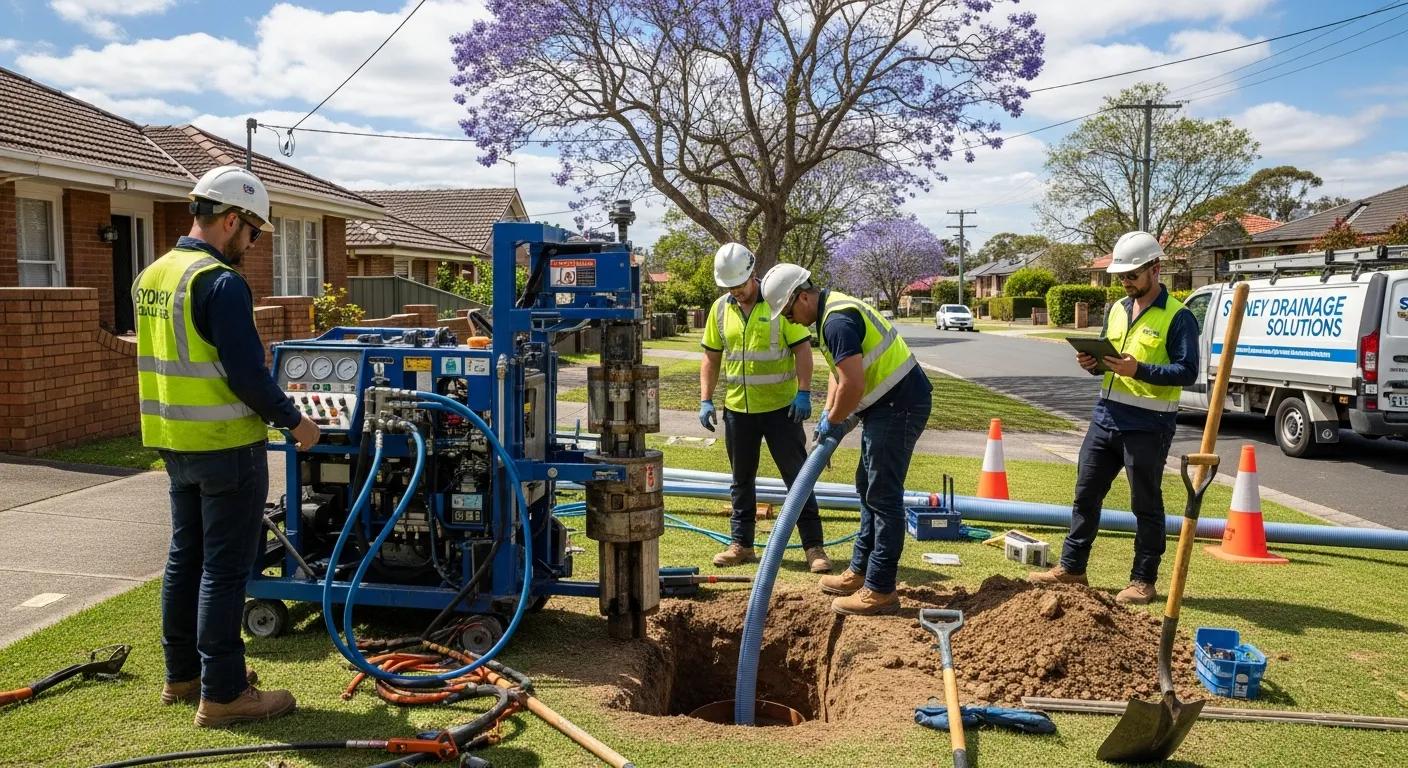
Directional boring is a trenchless installation method that creates a horizontal bore path beneath obstacles—such as driveways, roads, or landscaped areas—allowing new stormwater or service pipes to be installed without surface excavation. The process uses a steerable drill head and tracking system to navigate beneath structures, then pulls the replacement or new pipe into place; typical bores for drainage works range from short residential crossings up to longer runs for civil projects, depending on ground conditions. Directional boring minimises surface reinstatement and optimises access in built-up areas, making it a preferred choice in urban Sydney where preserving hard surfaces and gardens reduces the overall project investment. Understanding where directional boring is suitable helps determine whether a trenchless approach outweighs conventional excavation for a given site.
How Does Pipe Relining Repair Drainage Without Excavation?
Pipe relining restores the structural integrity and hydraulic performance of existing drainage pipes by inserting a resin-saturated lining that cures in place, creating a continuous, corrosion-resistant sleeve with minimal surface work. The method is effective for addressing cracks, root ingress, and leaks in otherwise intact runs and can extend pipe service life without the disruption and investment of full replacement. Relining has limitations where pipes have severe deformation, multiple collapsed sections, or misalignment; in such cases, selective excavation or replacement may be required. Recognising these limitations during CCTV inspection and assessment ensures relining is specified only when appropriate, preserving budget and reducing on-site disturbance for residents and businesses.
Why Choose Clearwater Plumbing and Civil for Sydney Drainage Installation?
Clearwater Plumbing and Civil specialises in plumbing and civil infrastructure services tailored to Sydney’s varied residential, commercial, and civil drainage needs, with specific expertise in directional boring, trenchless technology, and stormwater management. The company’s purpose — to provide specialised, high-quality plumbing and civil infrastructure services across Sydney — aligns with the technical needs discussed earlier, enabling a seamless bridge from diagnostic assessment to compliant installation. Clearwater offers services for commercial, industrial, and residential clients across Sydney and the Northern Suburbs, with an operational presence that also covers Port Macquarie; this coverage supports projects ranging from small residential upgrades to larger commercial and local government works. The next paragraphs list core capabilities and explain how 24/7 availability supports urgent drainage situations.
What Expertise and Services Does Clearwater Offer for Drainage Solutions?
Clearwater Plumbing and Civil provides a focused service menu including directional boring, trenchless relining, and comprehensive stormwater and subsoil drainage installations tailored to project scale and compliance requirements. These services translate technical strengths—like trenchless techniques for minimal disruption—into client benefits such as faster install times, reduced reinstatement, and compliant documentation for approvals. The company supports residential, commercial, and local government clients with licensed workmanship and civil capability suited to larger infrastructure projects, enabling integrated approaches where stormwater, subsoil, and asset protection must be coordinated. For property owners, this means access to contractors who understand both the technical installation and regulatory interface needed for successful drainage outcomes.
How Does 24/7 Emergency Service Benefit Sydney Clients?
Round-the-clock emergency plumbing and civil services reduce the damage window for blocked drains, storm-related failures, or sudden drainage collapses by providing rapid response when unexpected incidents occur. Rapid intervention can prevent escalation from a blocked drain to structural water ingress or widespread site contamination, especially on commercial or industrial sites where business continuity is critical. Having access to a 24/7 response also benefits local government or civil projects that require out-of-hours interventions to manage traffic or environmental risk during storm events. For clients, the practical advantage is clear: faster containment and mitigation reduces repair investment and maintains asset uptime.
What Is the Step-by-Step Process for Installing Drainage Systems in Sydney?
A systematic installation workflow ensures predictable outcomes: assessment, design, approvals, method selection, installation, testing, and restoration, followed by maintenance planning. Professional installations begin with a comprehensive site assessment, including visual inspection, CCTV drain inspection where existing pipes are present, soil and percolation checks, and rainfall/runoff analysis to size systems correctly. Design incorporates selection between trenchless and open-cut methods, required materials, inspection chambers, and any OSD measures, followed by liaison with Sydney Water and relevant council authorities to secure approvals if needed. The final stages include testing to confirm hydraulic performance, compliance documentation, and agreed reinstatement of surfaces to minimise disruption; the table below summarises typical stage durations for residential and commercial projects.
This stepwise approach supports predictable budgets and compliance; the following table outlines typical project phases and timeframes.
How Is a Drainage Assessment Conducted for Residential and Commercial Properties?
A drainage assessment combines visual inspection, topography, and soil testing with CCTV inspections of existing pipelines to identify blockages, defects, and hydraulic constraints that inform system design. Residential assessments are typically more focused on roof runoff, yard grading, and nearby overland flow paths, whereas commercial assessments expand to include impervious area calculations, trade waste considerations, and larger stormwater detention needs. The assessment concludes with recommended system types, sizing, and a scope that supports tendering or direct delivery, and it generates the documentation needed for council or Sydney Water consultations. Thorough assessment prevents under-sizing and reduces the likelihood of remedial work later, which leads directly into the approvals and compliance steps required for installation.
What Are the Installation and Compliance Steps for Sydney Drainage Projects?
Installation and compliance steps often require coordination with Sydney Water and local councils to confirm discharge points, connection conditions, and any OSD requirements; contractors prepare design packages and liaise on approvals as part of the delivery scope. Licensed plumbers and civil contractors provide compliance documentation, including test results, as-laid drawings, and certification necessary for handover to owners or authorities. Typical approvals needed can include development approvals for significant works, plumbing permits for connections, and specific permits for works within road reserves or public realm; experienced contractors manage these interactions to reduce client burden. Maintaining accurate records and compliance certificates at handover protects property owners and supports insurance and future asset management.
How Do Professional Drainage Installations Benefit Sydney Residential and Commercial Properties?
Professionally designed and installed drainage systems protect structures, manage erosion, and ensure compliance with local regulations, which together reduce long-term repair investment and preserve property value. For residential owners, effective drainage prevents basement dampness, collapsing lawns, and costly retaining wall repairs, while commercial properties benefit from uninterrupted operations, protected paved surfaces, and reduced liability from stormwater incidents. The table below compares common drainage approaches and their typical attributes to clarify trade-offs when selecting a solution.
What Are the Property Protection and Erosion Prevention Advantages?
Professional drainage installations reduce erosion by controlling runoff velocity and directing water away from vulnerable slopes and garden beds, using subsurface drains, diversion swales, or outlet protection where necessary. Properly sized conveyance and energy dissipation measures prevent gullies from forming on slopes and avoid undermining of retaining walls or pavement subgrades, which are costly to repair. For landscaped areas, subsurface drainage preserves plant health by keeping root zones at optimal moisture levels, while controlled discharge minimises downstream sediment transport and localised flooding. Implementing these protection measures at the installation stage reduces maintenance demands and preserves usable land and asset value over time.
How Does Proper Drainage Increase Property Value and Compliance?
Correctly specified drainage enhances marketability by removing buyer concerns about water damage, wet basements, or ongoing maintenance liabilities, and it can be a documented asset improvement at sale. Commercial property managers and strata bodies gain regulatory certainty when installations meet council and Sydney Water requirements, which simplifies audits and insurance renewals. Avoiding reactive fixes through upfront design and compliant installation saves owners from repeated expenditure and supports smoother transactions during property sales or tenancy changes. These values and compliance benefits make professional assessments and certified installations a sound investment for both residential and commercial stakeholders.
What Are the Common Questions About Sydney Drainage System Installation?
This section answers frequent practical questions about investment, approvals, and maintenance to help owners prepare for procurement and ongoing upkeep. Short, clear answers focus on the main factors influencing your investment, when council approvals are needed, and proactive maintenance steps to prevent blocked drains; the table below summarises common Q&A items for quick reference.
What is the Investment for Sydney Stormwater Drainage Installation?
The investment for drainage installation varies widely because it depends on site access, pipe length and diameter, choice of trenchless or open-cut method, material specifications, and whether approvals require additional design. As a practical guideline, smaller residential installations using standard materials and straightforward access typically represent a more modest investment compared to commercial sites that require larger-diameter pipes, pits, and possible OSD systems. However, an accurate estimate always requires a site-specific assessment and scope. Factors influencing your investment include reinstatement requirements for paved areas, traffic management for works in road reserves, and any specialised trenchless equipment for directional boring. Obtaining a detailed, itemised quote after an assessment remains the best way to understand the overall investment required for your project.
Do I Need Council Approval for Drainage Work in Sydney?
Council approval is typically required when works involve new connections to public stormwater systems, changes in runoff patterns that affect neighbouring properties, construction of OSD systems, or works within road reserves; requirements vary by council. Licensed contractors commonly prepare and lodge the necessary documentation, drawings, and calculations to streamline the approval process and ensure compliance with Sydney Water and local council conditions. Clients should expect approval timelines to influence project scheduling and should discuss permit responsibilities with their contractor during the design phase. Early engagement with an experienced provider reduces delays and ensures the correct approvals are in place before construction begins.
How Can I Maintain and Prevent Blocked Drains in Sydney?
Proactive maintenance reduces the incidence of blocked drains: regular gutter and downpipe cleaning, seasonal checks of surface channel drains, root intrusion monitoring, and scheduled CCTV inspections keep systems functioning and allow early intervention. Simple homeowner tasks include clearing leaves from gutters, ensuring downpipes discharge freely, and inspecting drain pits after storms; facility managers should adopt scheduled maintenance programs with professional cleaning and CCTV surveys at agreed intervals. When blockages are suspected, prompt professional inspection using CCTV diagnostics identifies the cause—sediment, roots, or structural failure—and informs the correct remedial method, whether high-pressure cleaning, relining, or replacement. Regular maintenance planning extends system life and avoids emergency repairs that are often costlier.
- Seasonal Cleaning: Clear gutters and surface drains after autumn and winter to prevent leaf build-up.
- CCTV Inspection: Schedule visual inspections to detect early signs of pipe damage or root ingress.
- Prompt Repair: Address small defects quickly with relining or targeted repair to avoid full replacement.
Regular maintenance reduces reactive investment and keeps drainage systems compliant and operational; establishing a simple maintenance schedule is a practical next step for property owners.
Additional Resources and Next Steps
If you require a site assessment, detailed quote, or compliance advice, consider engaging a licensed plumbing and civil contractor who can perform CCTV diagnostics, provide a design that meets council and Sydney Water requirements, and advise on trenchless versus open-cut options. Clearwater Plumbing and Civil provides these specialist services across Sydney and the Northern Suburbs and offers 24/7 emergency response for urgent drainage failures. Contact pathways and company details for inquiries are provided below to arrange inspections, quotes, or emergency interventions.
Clearwater Plumbing and Civil — contact details and service enquiries: Address: 87 Lane Cove Road, Ingleside, NSW, 2101, Australia. Phone: 0410 997 080. Email: chris@clearwaterpc.com.au