
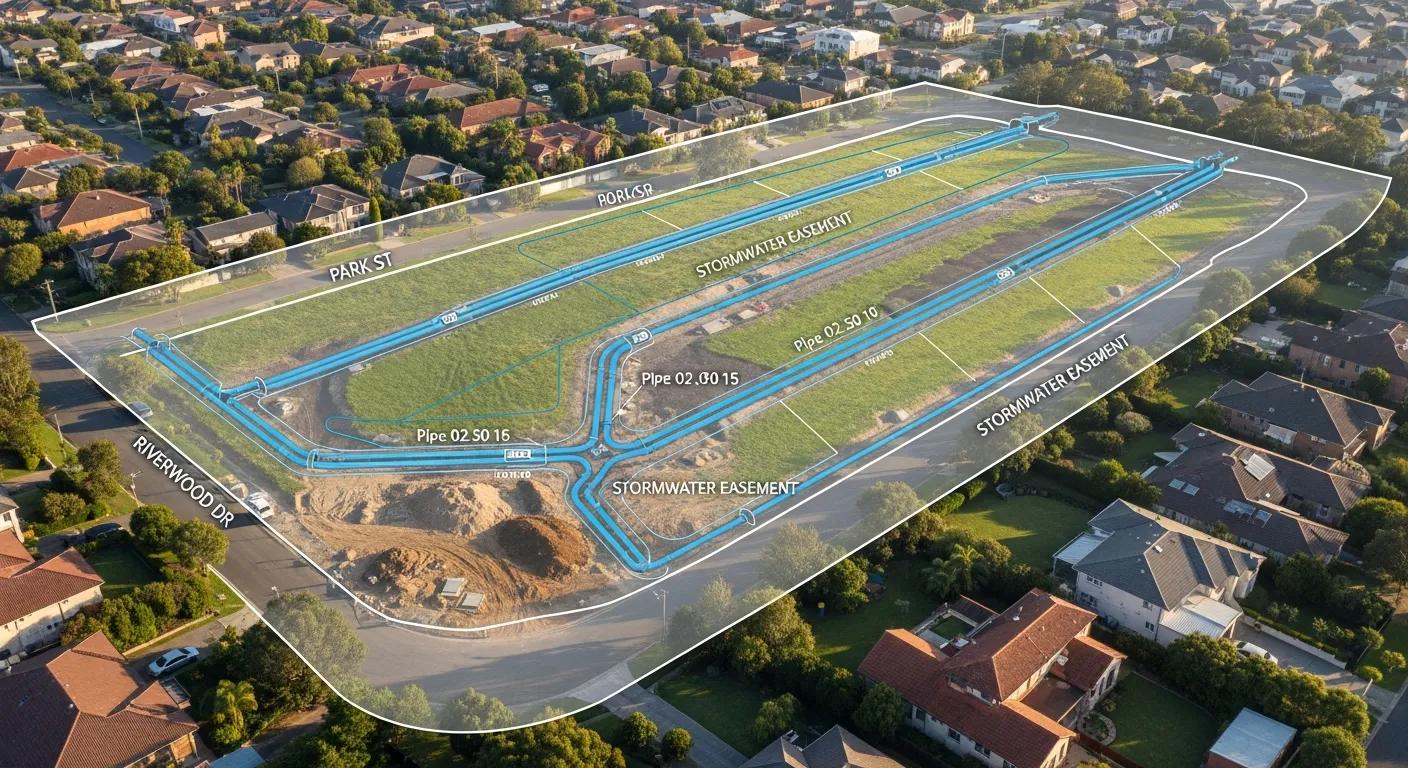
If you’re dealing with stormwater easements Sydney property owners and developers run into, it can feel like the rules change depending on the site, the authority involved, and what you’re trying to build. The good news is: once you understand what an easement generally is and why it exists, the next steps become a lot clearer—and a lot less stressful. In plain terms, a stormwater (drainage) easement is usually a legally recorded right that allows stormwater infrastructure (like pipes or channels) to cross land and be accessed for inspection and maintenance.
This article is practical guidance (not legal advice). For anything that affects approvals or property rights, it’s always worth confirming requirements with the relevant authority and qualified professionals.
What stormwater easements usually mean for Sydney projects
A stormwater easement is typically in place to protect drainage function and ensure there’s ongoing access to infrastructure that manages runoff and reduces flooding impacts. It’s not “ownership” of your land by someone else—rather, it’s a right held by another party (sometimes a utility or council) to use a defined part of the land for a specific purpose.
In Sydney, this matters because stormwater systems don’t stop neatly at property boundaries. A pipe or drainage line might service multiple properties or form part of a broader network. Easements are one way that access and maintenance can remain possible over time, even if ownership changes.
From a project perspective, the key implication is simple: if you’re planning works near an easement—or over drainage assets—you may have limitations on what you can construct, how you can construct it, and how you’ll preserve access for future maintenance. Sydney Water, for example, explains that building over or adjacent to stormwater assets can increase flooding risk and management costs, so they aim to keep such structures to a minimum and have processes for approvals where assets are near a site.
What’s typically allowed or restricted on a stormwater easement
The most important thing to understand is that easements can restrict how the burdened portion of the land is used, and they can impose obligations on current and future owners. That doesn’t automatically mean you “can’t do anything” in an easement area, but it does mean you need to plan carefully.
In many cases, the practical intent is to make sure:
- stormwater infrastructure can keep working as designed, and
- authorised parties can access it to inspect, repair, replace, or respond in an emergency.
If you build permanent structures that block access, you can create headaches for everyone later—including yourself—because maintenance access may require removal or disruption, and approvals can become more complex. Sydney Water’s guidance on building over or near stormwater assets highlights that structures over/adjacent to assets can worsen flooding and complicate asset management, which is why they manage these situations through guidelines and an approval process.
Because every easement is site-specific (location, width, asset type, authority), the safest approach is to treat easement areas as “design-sensitive zones” until confirmed otherwise.
The common triggers that bring stormwater easements to the surface
Many owners only discover easement issues when they’re already in planning mode. That’s normal—easements are easy to ignore until they collide with what you want to build.
Stormwater easements commonly come into focus when you’re:
- planning an extension, new build, or major renovation
- developing or subdividing a site
- dealing with repeated stormwater or drainage performance problems
- replacing or upgrading drainage lines
- encountering council conditions that require easement creation over existing drainage lines
For instance, Northern Beaches Council policy documents indicate that drainage easements may be required for certain drainage lines and that development conditions can require a property owner to grant a drainage easement where a constructed public drainage system exists within private property.
Even if you’re not on the Northern Beaches specifically, it’s a useful example of a broader Sydney reality: easements can be tied to development conditions and long-term maintenance access requirements.
Where people get caught out (and how to avoid expensive rework)
Most problems with stormwater easements aren’t caused by bad intentions—they happen because people don’t realise the “stormwater part” of a project is an approvals and access issue, not just a pipe-and-pits issue.
A few common pinch points include:
Designing too late around the easement If an easement crosses the area you intended to build on, you can end up redesigning after spending time and money on plans that aren’t workable.
Assuming “it’s private land, so it’s my call” Easements exist precisely because there’s another party’s interest involved. Sydney Water’s easement procedure notes that easements are legally enforceable and can restrict the use of the burdened property.
Building over or too close to stormwater assets without the right pathway If stormwater assets are within a certain proximity, there may be an approval process to follow. Sydney Water notes that if a stormwater asset is located within 10 metres of a site, building plans need approval through a Water Servicing Coordinator pathway.
Not accounting for maintenance access in the long term A design that “works today” can become a problem later if the asset needs repair and there’s no way to reach it without damaging structures or landscaping.
The best prevention is early checking: identify easement locations from title/plan documents, then treat them as constraints at concept stage—not as a “we’ll deal with it later” detail.
Navigate Stormwater Easement Challenges Efficiently
If you’re aiming for a smooth project, the goal isn’t to fight the easement—it’s to design and coordinate around it, so approvals and construction can move forward cleanly.
A practical planning approach generally includes:
- confirming where the easement sits and what asset is involved (pipe, channel, pit, etc.)
- understanding who holds the benefiting right (utility, council, neighbouring property, or another party)
- shaping design to protect access and reduce risk to the asset
- confirming the correct approvals pathway (especially if a building is proposed near or over stormwater infrastructure)
Sydney Water’s “building over or next to assets” guidance is a good example of how formal these pathways can be: it points to technical guidelines and an asset-focused approval process for development near stormwater assets.
This is also where clear communication pays off. If you’re coordinating builders, designers, and stakeholders (including neighbours in some cases), the earlier you establish what’s possible, the fewer surprises you’ll have once the job is on site.
Stormwater Easements Sydney: why plumbing and civil capability matters
Stormwater easements aren’t only a paperwork issue—they’re often a “works interface” issue. The easement might dictate where you can excavate, where you can place pits, how you reinstate surfaces, and how you connect drainage to the broader network.
That’s why a combined plumbing + civil lens can be helpful when projects require drainage construction, earthworks, and reinstatement coordination—not just internal plumbing. Clearwater Plumbing & Civil positions itself as delivering plumbing solutions alongside civil works such as drainage and earthworks across NSW, which aligns naturally with easement-adjacent projects where the scope crosses boundaries.
The real-world value for commercial clients (and serious residential builds) is smoother sequencing. Drainage works can involve excavation planning, access controls, reinstatement quality, and documentation—especially when approvals are involved. Keeping those elements coordinated reduces the chance of delays and “scope gaps” that stall progress.
A sensible pathway from “we found an easement” to “the job is done”
When clients feel stuck, it’s often because easements sit in the awkward space between design, approvals, and physical works. A calmer pathway is to break it into a few clear stages.
First, clarify the facts: where the easement is, what asset it relates to, and what party benefits from it. NSW Land Registry guidance explains that easements are rights applying over land and may be created by registration of a plan or a dealing, which is why title/plan information matters early.
Second, align your design approach: keep access and asset protection front-of-mind, and avoid locking in structures that complicate maintenance. Sydney Water’s materials are explicit that building over or adjacent to stormwater assets can create risk and cost, which is why they aim to minimise those structures and manage them via guidelines and approvals.
Third, coordinate the delivery: once approvals and design direction are clear, the on-site work should be planned with tidy execution and proper reinstatement so the site remains safe, functional, and maintainable.
FAQs
How do I know if my property has a stormwater easement?
It’s usually shown on the title and deposited plan documents, because easements are legal rights recorded against land. If you’re unsure, a conveyancer, surveyor, or relevant authority can help you interpret what’s recorded.
Does an easement mean someone else owns part of my land?
Generally, no. An easement grants a right of use for a specific purpose (like drainage) but doesn’t transfer ownership.
Can I build over a stormwater easement in Sydney?
Sometimes it may be possible, but it typically depends on the asset, the authority involved, and the approval pathway. Sydney Water notes that building over or near stormwater assets can worsen flooding risk and that approvals and guidelines apply where assets are near a site.
What happens if stormwater assets need maintenance later?
Easements exist to preserve access for inspection, repair, replacement, or emergency works. If structures block access, it can create serious complications—so planning for long-term maintenance access is usually central to approval decisions.
Are stormwater easements only a council issue?
Not always. Depending on the asset and location, easements may involve councils, utilities (like Sydney Water), neighbouring properties, or other parties. The authority involved influences approval steps and design constraints.
If I’m developing, can an easement be required as a condition?
In some council contexts, drainage easements can be required where drainage infrastructure exists and needs protected access, including as a condition tied to development approvals. Northern Beaches Council policy documents provide an example of this approach.
Move forward with confidence when stormwater constraints show up.
Stormwater easements can feel like a roadblock—until you treat them as part of good planning. With the right early checks, careful design, and coordinated delivery, most projects can move forward without last-minute redesigns or avoidable delays. If you’re navigating stormwater easements in Sydney and need support that’s practical, organised, and mindful of approvals and long-term access, Clearwater Plumbing & Civil can help guide the process and deliver drainage and related works as needed.
Call:0410 997 080Email:chris@clearwaterpc.com.au