
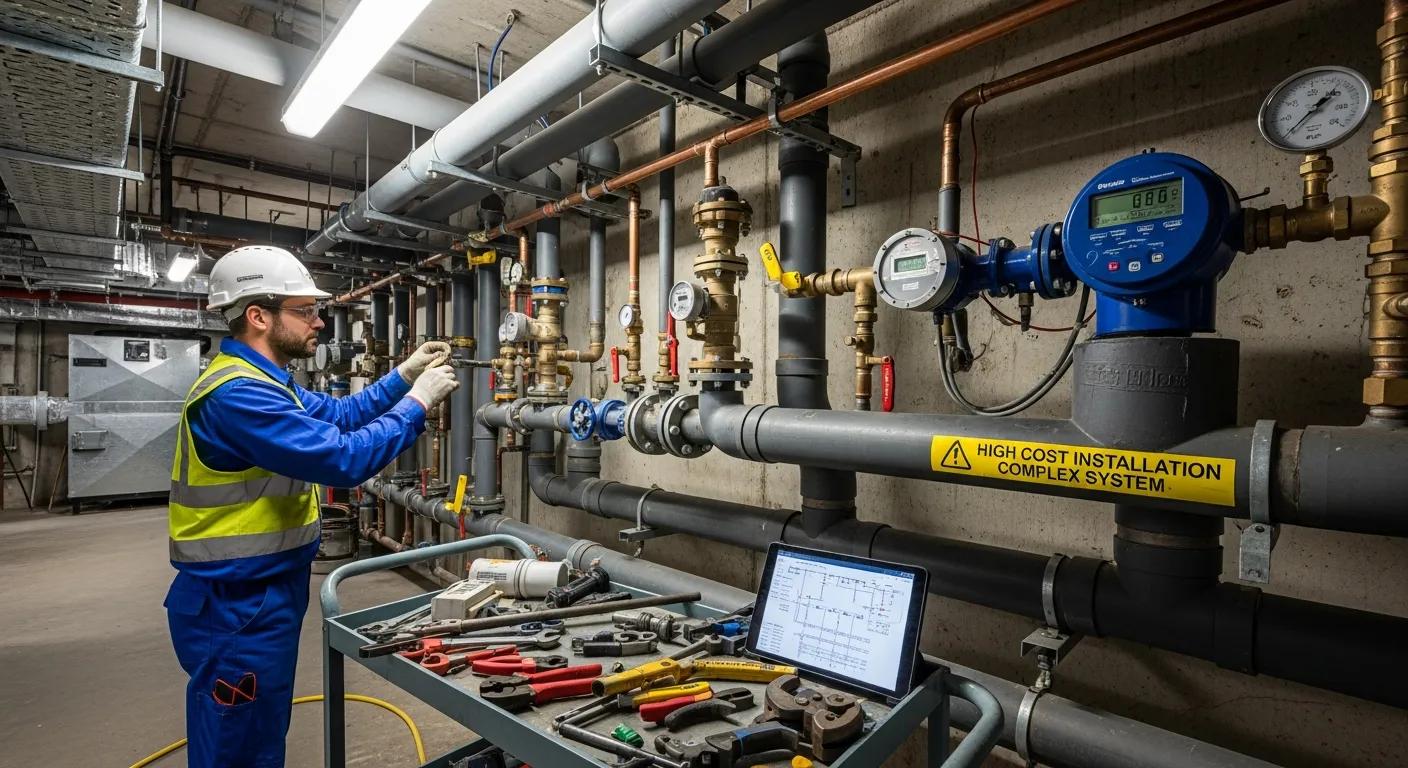
Uncovering the Key Drivers of Commercial Plumbing Costs in Sydney
Commercial plumbing investment in Sydney varies widely depending on project scope, specialist methods and regulatory requirements, and understanding those drivers helps businesses budget accurately and avoid surprises. This guide explains the principal factors that influence commercial plumbing prices in Sydney, shows how project complexity and site access multiply expenditure, provides insights into the investment required for service types such as directional boring and stormwater systems, and outlines practical steps to avoid hidden fees. You will also find comparative tables, actionable checklists, and guidance on maximising value through maintenance and trenchless options, with clear examples relevant to commercial and industrial clients. Read on to learn how labour, materials, permits and specialist equipment combine to form a final price, how to compare itemised quotes, and what information contractors like Clearwater Plumbing & Civil need to prepare transparent estimates. The goal is to give finance managers, facility owners and project planners a pragmatic roadmap to estimate, compare and control commercial plumbing costs in Sydney.
What Are the Main Factors Affecting Commercial Plumbing Prices in Sydney?
Commercial plumbing investments in Sydney are driven by a consistent set of factors: labour and expertise, materials and equipment, project complexity and scope, urgency or after-hours requirements, and permits/inspections required by councils. Each factor contributes differently to the final price because they affect time on site, specialist resources and compliance overheads; understanding which factors dominate a job helps forecast contingencies and select the right contractor. The following concise list highlights these primary financial drivers and explains their effect for quick decision-making and featured-snippet style clarity.
Commercial plumbing prices in Sydney are most commonly influenced by:
- Labour and Expertise: Higher-skilled crews and specialists command higher hourly or day rates, particularly for trenchless or industrial work.
- Materials and Equipment: Premium pipe materials or hired machinery, such as directional boring rigs, increase upfront expenditure but can reduce reinstatement.
- Project Complexity: Interconnected systems, multi-level buildings and embedded services raise time, risk and contingency allowances.
- Urgency and After-Hours Work: Emergency callouts and night or weekend work typically incur surcharges and overtime.
- Permits and Inspections: Council approvals, easement negotiations and mandatory testing add fixed fees and administrative time.
Understanding these drivers leads directly to detailed considerations about labour and material choices, which are explored next to clarify where most budgets concentrate.
How Do Labour Costs and Plumber Expertise Influence Commercial Plumbing Rates?
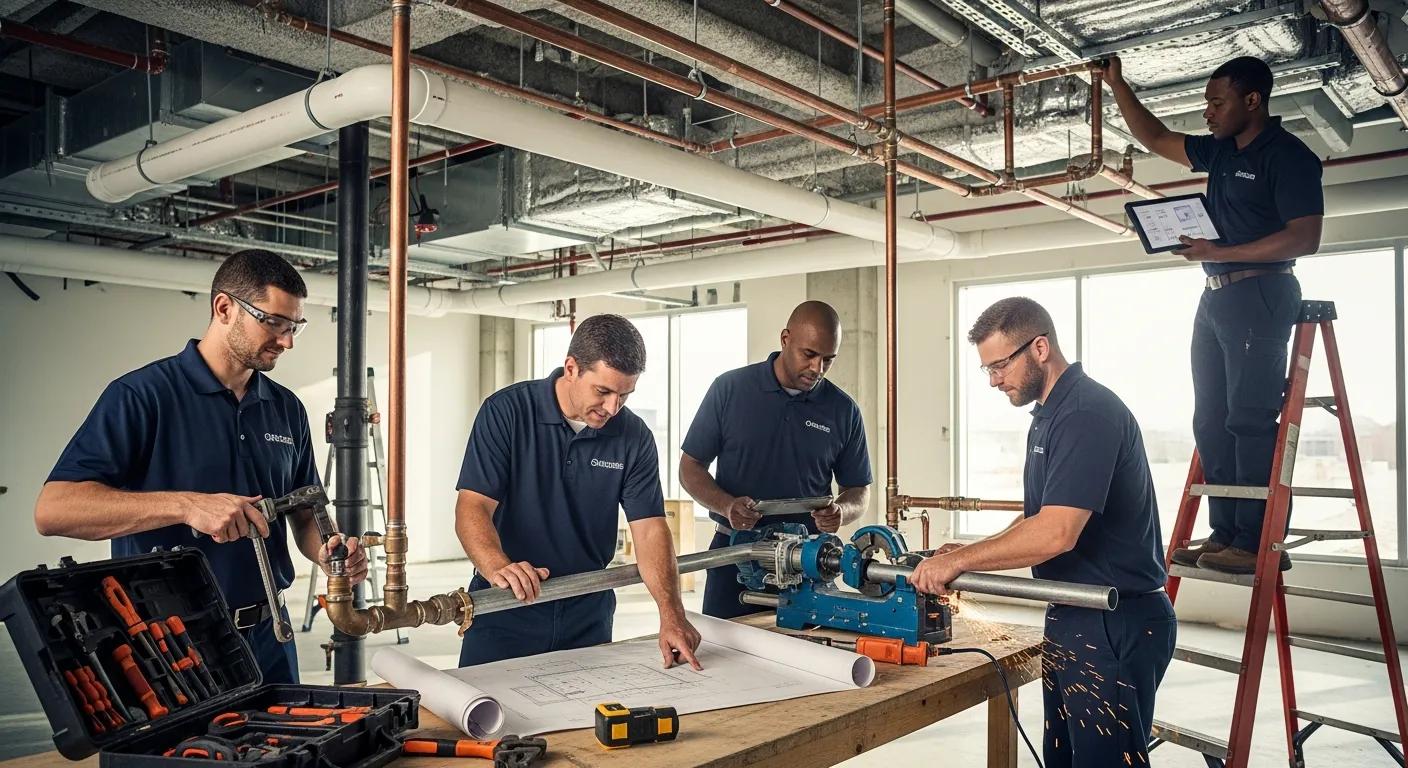
Labour costs form a large portion of commercial plumbing budgets because they represent skilled time, onsite supervision and project management necessary for compliance and safety. Typical hourly bands vary by role and specialisation: general commercial plumbers, licensed specialists for industrial pipework, and operators for trenchless machinery each attract different rates, with project premiums for certified operators and safety-critical supervisors. Specialist tasks such as directional boring require experienced rig operators and support crews, which increases labour hours and per-hour charges but can shorten total project duration through reduced excavation. When estimating, multiply estimated crew hours by the appropriate skill band and add project management time to capture realistic labour exposure.
These labour dynamics naturally connect to material and equipment choices, since high-end materials or rented machinery change both hourly productivity and total expense, which we examine in the next subsection.
What Role Do Materials and Equipment Quality Play in Commercial Plumbing Costs?
Material selection and equipment requirements directly impact both capital and lifecycle expenditure for commercial plumbing projects; durable materials and specialist plant increase upfront investment but lower failure and maintenance risk. Commonly selected materials—such as ductile iron, PVC, HDPE or stainless steel—vary in price and suitability depending on pressure, corrosivity and lifespan requirements, while choice of fittings and valves affects installation complexity. Hiring specialised equipment like directional boring rigs, CCTV inspection systems or high-pressure cleaning units constitutes a measurable hire cost that should be compared against excavation and reinstatement savings. Supply chain volatility and bulk procurement also influence pricing, so early material specification and procurement planning reduce cost variability and help lock in predictable budgets.
Recognising how materials and equipment change total project economics leads to assessing how overall project complexity multiplies these effects on cost and schedule.
How Does Project Complexity Impact Commercial Plumbing Costs for Sydney Businesses?
Project complexity increases expenditure by adding risk, additional trades, longer timeframes and higher contingency allowances; complexity is defined by system scale, interdependencies and site constraints. Complex projects—such as multi-storey mechanical services integrations, embedded pipework in structural slabs, or deadlines tied to critical business operations—require more coordination, staged shutdowns and specialised testing that drives both labour and non-labour costs. Project managers should therefore quantify complexity early in the brief, because it directly informs insurance needs, safety planning and the choice to use trenchless solutions that might lower disruption even if they raise equipment costs. The following checklist identifies typical complexity drivers so teams can prioritise site surveys and detailed scopes before committing budgets.
Common elements that increase complexity and cost include:
- Scale and Interconnectivity: Large systems with multiple tie-ins require phased work and additional isolation strategies.
- Site-Specific Constraints: Heritage sites, hazardous materials or contaminated soils demand specialist handling and approvals.
- Additional Compliance and Testing: Hydrostatic testing, certification and third-party inspections add time and fees.
Acknowledging these complexity drivers helps determine whether upfront investment in planning, surveys and trenchless technology will reduce downstream costs and operational disruption, which is explored in the access and equipment subsection.
Which Project Elements Increase Complexity and Cost in Commercial Plumbing?
Elements that commonly add cost include the physical scale of a system, the degree of integration with HVAC or fire services, and the presence of hazardous materials requiring remediation protocols. For example, embedding new drainage within a live production area requires traffic management, phased shutdowns and possibly insurance endorsements, each introducing additional cost lines. Heritage or confined-space sites often need specialist trades and permits that extend the schedule and increase supervision costs. Recognising these elements early allows owners to budget for scaffolding, monitoring and specialist subcontractors, thereby reducing later change orders and disputes.
How Does Access Difficulty and Specialised Equipment Affect Pricing?
Restricted access, night works, traffic management and confined-space procedures each increase time-on-task and safety overheads, which are reflected in higher labour charges and site mobilisation fees. Specialist equipment hire and operator premiums—such as for directional boring rigs, vacuum excavation or elevated-work platforms—are priced both for the plant and certified operator competence. Logistics like road-occupation permits or lane closures add council fees and traffic control costs; where reinstatement in paved or finished areas is required, restoration work can exceed the original civil budget.
These access-driven costs are especially relevant when choosing service types such as directional boring or trenchless relining, which we address in concrete investment terms below.
Understanding the Investment for Specific Commercial Plumbing Services in Sydney
Understanding the investment required for specific services helps businesses plan and evaluate proposals; we’ll outline typical considerations for directional boring, stormwater management, and industrial pipework repairs. Investment bands vary by distance, diameter and site conditions for trenchless works, while stormwater systems depend on capacity and council requirements; industrial repairs are influenced by material and pressure-class specifications. The following table outlines key considerations for common commercial services in Sydney, intended for preliminary planning rather than firm proposals.
The following table gives indicative investment considerations for common commercial services in Sydney, intended for preliminary budgeting rather than firm quotes.
Understanding the Investment in Directional Boring and Trenchless Technology in Sydney
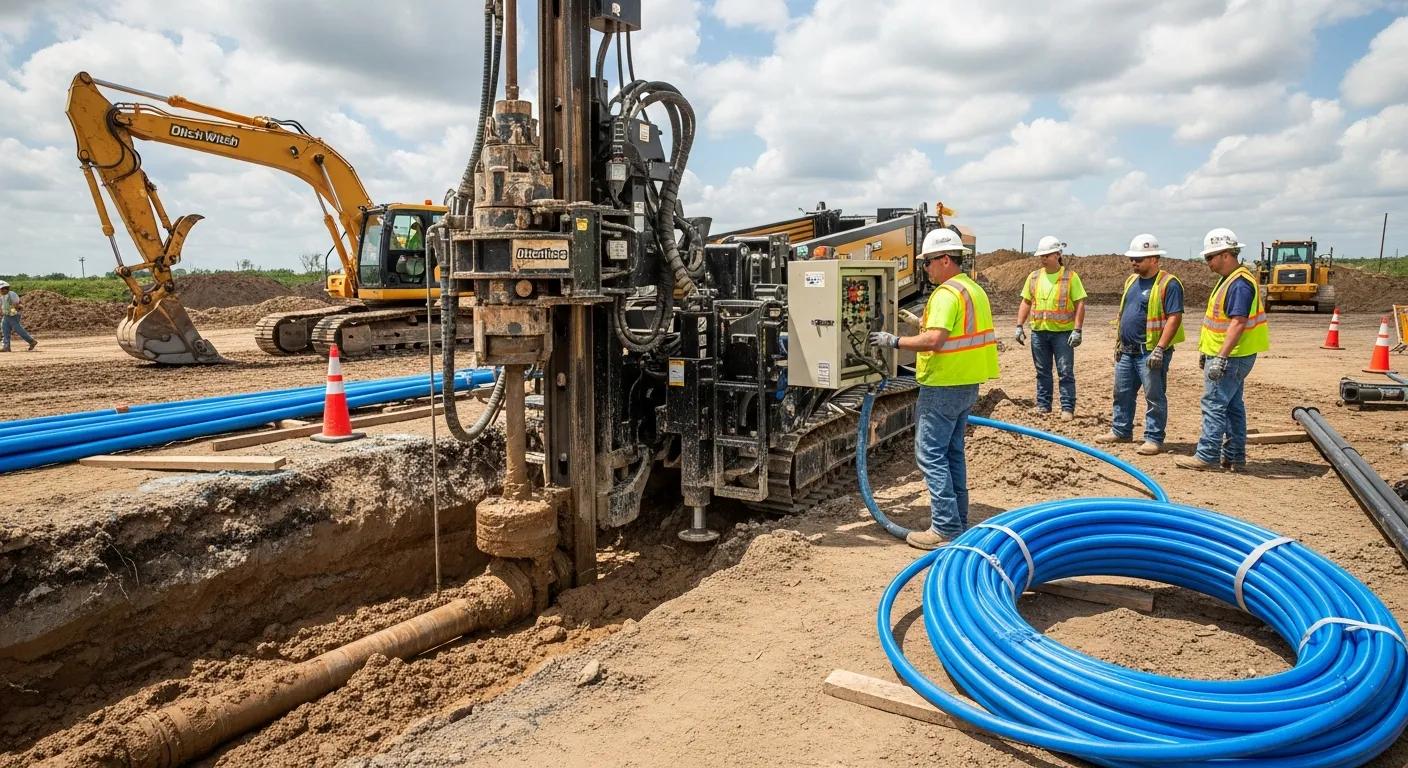
Directional boring and other trenchless techniques are typically quoted either per metre or as a project price, depending on setup complexity; per-metre investments can be considerable, with projects requiring pits, reinstatement, or large diameters scaling upward. Key investment influencers include bore distance, diameter, ground conditions (rock versus soft soil), access for rig placement and the need for pits or surface reinstatement. Although equipment and operator premiums raise initial investment estimates, trenchless methods frequently save money on traffic management, pavement reinstatement and business downtime compared with open excavation. An anonymised example: a short directional bore replacing 20 metres of kerbside drainage may show higher per-metre costs than excavation but lower total project cost once traffic control and asphalt reinstatement are included.
Recognising these trade-offs helps procurement teams evaluate whole-of-job economics rather than focusing solely on unit rates.
What to Expect for Stormwater Management and Drainage Systems?
Stormwater work ranges from modest repairs to complex detention or retention system installs, and investment differences reflect capacity, pipe material and required approvals. A minor pit and line repair may represent a modest investment, whereas a full system upgrade with detention tanks, pumped systems or swale construction can involve a substantial investment due to excavation, structural works and council compliance. Council application and easement negotiation costs can be material in Sydney projects, particularly when work affects public assets or requires stormwater easement relocations. Accurate sizing, site survey and early liaison with the local council reduce the risk of scope-related surprises and help lock in realistic budgets.
These considerations help determine whether relining, partial repairs or full replacements represent better value over the asset lifecycle.
Understanding the Investment for Industrial and Commercial Pipework Repairs?
Industrial and commercial pipework repairs vary from spot repairs and relining to full replacements; relining typically reduces excavation and asset downtime, making it a more efficient solution in many scenarios. Typical repair jobs may represent a modest investment for smaller runs, while full replacements for pressured or specialised materials can involve a significant investment depending on length, material and welding/inspection requirements. Material selection (stainless vs coated steel vs HDPE) and pressure/temperature ratings for industrial systems raise both the materials and certification costs, and business downtime for critical services increases indirect costs that owners should quantify. Comparing relining versus replacement should include disruption, replacement frequency and lifecycle cost to determine the most cost-effective solution.
Evaluating these service types reinforces the importance of careful scope definition and transparent quotes discussed next.
How Can Businesses Avoid Hidden Costs in Commercial Plumbing Projects?
Hidden fees and ambiguous scopes are a common source of budget overruns; the most effective avoidance strategies are insisting on itemised quotes, defining scope clearly, allowing for reasonable contingency and confirming permit responsibilities. Suppliers sometimes add mobilisation, disposal, after-hours or unforeseen remediation charges that were not explicit in the initial estimate, so procurement teams should compare like-for-like itemised quotes and ask targeted questions to reveal potential extras. Below is a concise checklist of common hidden fees to watch for, followed by a short explanation of how transparent quoting practices limit these risks and what to expect from a contractor that offers free, itemised quotes.
Watch for these common hidden fees and how to spot them:
- Call-out and mobilisation fees: Confirm whether a one-off mobilisation or per-visit fee is charged.
- After-hours and emergency surcharges: Ask for published overtime multipliers or fixed emergency rates.
- Disposal and reinstatement costs: Specify who pays for spoil removal, backfill and finished surface repairs.
- Contingency for unknowns: Check whether contingency is a separate line item and how it will be approved.
Recognising these items early enables businesses to compare quotes properly, reduce negotiation friction and avoid unexpected cost escalation during execution.
What Hidden Fees Should You Watch for in Commercial Plumbing Quotes?
Hidden fees typically appear as mobilisation, disposal, after-hours, traffic control, or reinstatement charges, and they often stem from an ambiguous scope or missing site information. To spot them, require line-item pricing for labour, plant hire, materials, permit fees and reinstatement, and ask how contingencies will be documented and authorised in change-orders. Requesting a scope-limited site survey and CCTV inspection before quoting reduces unknowns and clarifies likely remediation needs. When comparing quotes, normalise them by adding estimated permit and traffic management costs so each proposal reflects the same baseline.
Spotting these hidden fees ties directly to selecting contractors with transparent processes, which is described in the next subsection.
How Does Clearwater Plumbing and Civil Ensure Transparent Pricing?
Clearwater Plumbing & Civil provides free, itemised quotes and states a commitment to transparent pricing and 24/7 emergency availability, which helps clients compare proposals and control contingency spend. Our quote process typically begins with a site survey and scope-defining inspection—often including CCTV where applicable—followed by an itemised estimate that separates labour, materials, plant hire, permits and reinstatement so clients understand each cost element. For projects requiring specialist methods such as directional boring or stormwater works, Clearwater identifies the specialist equipment and permits needed and outlines potential variables that may affect final pricing. This clear structure allows clients to approve change orders with established governance and reduces the risk of disputed extra charges.
How Can You Maximise Value and Reduce Commercial Plumbing Costs in Sydney?
Maximising value combines preventive procurement choices, detailed project planning and choosing techniques that reduce disruption; adopting these approaches lowers lifecycle cost and helps avoid costly emergency work. Preventative maintenance contracts reduce emergency premiums and spread cost across predictable service schedules, while investing in accurate site surveys and CCTV inspections before tendering reduces contingency and change-order volume. Selecting trenchless options where appropriate often raises plant costs but reduces reinstatement and business disruption, producing net savings when whole-of-job costs are compared. The list below outlines practical value strategies, and the summary paragraph explains how to prioritise them in procurement and asset management.
Practical strategies to maximise value:
- Implement preventative maintenance contracts: Regular inspections catch issues early and reduce emergency premiums.
- Invest in detailed site surveys: CCTV and access assessments firm up scope and keep contingencies low.
- Evaluate trenchless options: Compare whole-job economics—equipment premium vs reinstatement savings.
Prioritising these strategies requires cross-functional input from facilities, procurement and operational teams so that savings are measured across downtime, reinstatement and direct capital costs rather than solely on unit line items.
What Are the Benefits of Preventive Maintenance and Service Contracts?
Preventative maintenance and service agreements deliver predictable costs, extend asset life and reduce emergency call-outs, which lowers both direct repair and indirect business interruption expenses. Regular inspections and scheduled servicing allow defects to be fixed at planned rates rather than emergency premiums, and predictable contracts can secure negotiated service rates that are favourable compared with ad-hoc rates. Contracts also facilitate compliance monitoring—ensuring testing and certification records are maintained—and provide a governance framework for rapid triage should an incident occur. Over a typical year, planned maintenance often proves cheaper than multiple unplanned interventions when indirect business losses are included in the analysis.
These benefits make negotiated service contracts an effective tool for controlling total lifecycle plumbing costs.
How Do Detailed Quotes and Planning Help Control Plumbing Expenses?
Detailed, itemised quotes reduce ambiguity and enable straightforward comparison between suppliers by separating labour, materials, plant hire, permits and reinstatement into clear line items. Including a change-order workflow with approval thresholds and documented contingency release gates prevents scope creep and uncontrolled cost growth during delivery. Site surveys, CCTV inspections and geotechnical assessments before tendering improve estimate accuracy and shrink the contingency percentage required for unknowns. Adopting these practices as standard procurement protocol reduces disputes, accelerates approvals and aligns contractor incentives with predictable outcomes.
A clear scope definition, therefore, supports better value delivery, which leads to how to request a transparent quote from contractors like Clearwater Plumbing & Civil.
How Do You Get a Transparent Commercial Plumbing Quote from Clearwater Plumbing and Civil in Sydney?
To obtain a transparent commercial plumbing quote from Clearwater Plumbing & Civil, prepare clear site information, arrange an on-site survey where possible, and request an itemised estimate that separates labour, materials, equipment hire, permits and reinstatement. Clearwater’s stated process focuses on understanding site access, system drawings and any required council interactions before issuing a free, itemised quote; this makes it easier to compare options and to identify where trenchless methods or specialist plant are recommended. The following step list explains the documents and details to provide and clarifies what to expect regarding emergency availability and after-hours pricing, helping you secure a reliable, comparable quotation.
Follow these steps to secure an accurate quote:
- Provide site plans, photos and service drawings: These documents reduce unknowns and help determine access constraints.
- Detail operational constraints and preferred timings: Note shutdown windows, business-critical hours and required sequencing.
- Request CCTV or survey before final estimate: Pre-works inspections firm up line-item costs for repairs or relining.
What Information Is Needed to Receive an Accurate Commercial Plumbing Quote?
Accurate quotes require site plans, photographs of the affected area, service and drainage drawings, access details, and an outline of operational constraints or shutdown windows. Clear information about preferred timing, required certifications, and whether traffic management or lane closures will be needed helps the estimator include the correct permit and mobilisation lines. Providing a recent utility location report or a brief history of previous interventions (if available) also reduces unknowns and the contingency percentage applied. The more complete the submission, the quicker the estimator can convert a site visit into a fixed, itemised quote.
Supplying these items, therefore, reduces the likelihood of later change orders and supports firm cost comparisons between providers.
How Does Clearwater Plumbing and Civil Handle Emergency and After-Hours Pricing?
Clearwater Plumbing & Civil states 24/7 emergency availability and handles after-hours work with standard industry practice of applying overtime and mobilisation surcharges to reflect the cost of rapid response and staff premiums. Typical reasons for after-hours surcharges are urgent risk-to-life failures, major leaks threatening business continuity, or incidents requiring immediate isolation to protect assets; these situations attract higher labour rates and possible call-out fees. To minimise emergency costs, businesses should implement preventative maintenance, rapid triage procedures and escalation workflows so that only genuine emergencies trigger after-hours responses. When requesting an emergency callout, expect the contractor to provide a rapid assessment, temporary stabilisation and a follow-up itemised plan for permanent remediation.
Being prepared with preventive measures and clear escalation criteria reduces the frequency and cost of emergency interventions.
87 Lane Cove Road, Ingleside, NSW, 2101, Australia Email: chris@clearwaterpc.com.au | Phone: +61 410 997 080